All Activity
- Today
-

Catholic Church's Claims Are Weak In Early History, Regarding Papa
linate replied to dairygirl4u2c's topic in Catholic Debate Table
In the Early Church—particularly during the first four centuries—the phrase "Chair of Peter" (Cathedra Petri) was far more frequently used to describe the shared office of all valid bishops than it was to mean exclusively the Bishop of Rome. While the Roman See was respected as the historical baseline and geographic anchor of Peter’s chair, the phrase itself was rooted in an ecclesiology that saw every local bishop sitting in Peter’s seat to govern his local flock. 1. The Primary Meaning: The Order of Bishops In early patristic theology (most explicitly shaped by St. Cyprian of Carthage in the 3rd century), the "Chair of Peter" was not a geographic location or a unique, single-office papacy. It was an abstract concept representing episcopal authority as a whole. * The One Chair Shared by Many: Cyprian famously wrote in De Catholicae Ecclesiae Unitate: > "The episcopate is one, each part of which is held by each one for the whole." (Episcopatus unus est cujus a singulis in solidum pars tenetur). > * Peter as the Prototype: For Cyprian and many early fathers, Christ gave the keys and the authority to Peter first in Matthew 16 symbolically, to show that the Church’s authority originates in unity. Right after doing so, Christ gave the exact same binding/loosing power to all the apostles in John 20. Therefore, every valid bishop acts in the persona of Peter when he teaches, forgives sins, and governs his diocese. * Equal Authority: In this view, the Bishop of Carthage, the Bishop of Alexandria, and the Bishop of Rome all occupied the "Chair of Peter" in their respective local churches. 2. The Secondary Meaning: The Bishop of Rome The phrase was also applied directly to the See of Rome, but with specific caveats regarding what that designation implied: * Historical Connection: Rome was uniquely revered because it was the location where Peter (and Paul) preached, served, and suffered martyrdom. Thus, Rome was physical evidence of the Cathedra Petri in a concrete, local sense. * A Symbol of Origin: Fathers like Augustine, Optatus, and Cyprian would point to the physical Chair of Rome as the source or head of regional unity. To be in communion with the local Chair of Peter in Rome meant a bishop was in communion with the global network of orthodox churches. * Primacy of Honor, Not Jurisdiction: Even when Rome was referred to as the Chair of Peter, early writers interpreted this as a primacy of honor or a center of consensus, not as conferring supreme judicial power over other bishops. 3. Summary Comparison | Perspective | "Chair of Peter" (Cathedra Petri) | Role of the Bishop of Rome | |---|---|---| | Early Patristic View (Cyprian, Augustine, Early Councils) | The universal Episcopal Office. Every bishop sits on the Chair of Peter to shepherd his local diocese in collegial unity with all other bishops. | The Primate / First among equals. Rome is the concrete, historical anchor of that single chair, serving as a touchstone of unity and orthodoxy. | | Later Ultramontane / Vatican I View (1870 onward) | Exclusively the Papal See. The singular, unique office of the Bishop of Rome over and above all other bishops. | Supreme Jurisdiction & Infallibility. The sole successor of Peter possessing absolute administrative and doctrinal authority over all other churches. | When early theologians praised the "Chair of Peter," they were praising the unified order of bishops as initiated through St. Peter, using the Roman See as the primary real-world example of that unbroken succession. -
I got into doom metal a few years ago, and occasionally I like a little bit of metalcore or deathcore, in small doses. The album Watching From A Distance by Warning is an incredible piece of music. Not just as metal. I think it's an artistic achievement. Their twenty-years-later follow-up, Rituals of Shame, which just came out this spring, is also excellent, although maybe not quite as iconic. Mirror Reaper by Bell Witch is also really good. I find it kind of atmospheric and relaxing. It's great to have on in the background while I'm working.
-
Catholic Church's Claims Are Weak In Early History, Regarding Papa
linate replied to dairygirl4u2c's topic in Catholic Debate Table
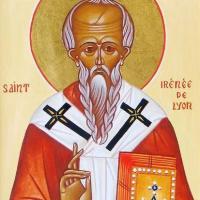
The ecclesiology of the Early Church Fathers—specifically St. Irenaeus of Lyons (c. 130–202), St. Cyprian of Carthage (c. 200–258), and St. Augustine of Hippo (354–430)—is a major point of discussion in historical theology. While all three prioritized Church unity, their surviving texts do not articulate modern dogmas of Papal Supremacy or Infallibility. Instead, they viewed the Bishop of Rome as a premier center of communion within a collegial network of equal bishops. Absence of Papal Supremacy and Infallibility The modern definitions of the papacy—jurisdictional supremacy over all bishops and infallibility when defining doctrine ex cathedra (promulgated at Vatican I in 1870)—are absent from the writings of these Fathers. * No Unilateral Absolute Jurisdiction: None of these three Fathers treated the Bishop of Rome as having absolute unilateral jurisdiction over other regional sees. Bishops were understood to be autonomous in their local dioceses, governing in council with their regional peers. * No Ex Cathedra Infallibility: Doctrinal truth was preserved through apostolic succession—the historical continuity of teaching passed down through all legitimate bishops—rather than guaranteed by an infallible Roman office. How They Understood "Papal Communion" and Roman Primacy Though they did not hold to papal supremacy, these Fathers attributed a unique primacy of honor and historical prestige to the See of Rome as a touchstone of orthodoxy and communion. * Irenaeus of Lyons: In Against Heresies (Book III), Irenaeus defended Christianity against Gnosticism by pointing to the unbroken succession of bishops. He singled out Rome—founded by Peter and Paul—as a reliable benchmark, stating that because of its "preeminent authority" (potentior principalitas), every local church must agree with Rome's preserved tradition. For Irenaeus, Rome served as an anchor of historical apostolicity, not a unilateral dictator. * Cyprian of Carthage: In On the Unity of the Church, Cyprian wrote that Christ built the Church on Peter to symbolize unity. He called Rome the Cathedra Petri ("Chair of Peter") and the "principal church" from which priestly unity sprang. Crucially, however, Cyprian believed every valid bishop sat in the Chair of Peter. The primacy given to Peter was symbolic: it demonstrated that the episcopate is one, shared equally by all bishops (episcopatus unus est). * Augustine of Hippo: During the Donatist controversy, Augustine pointed to communion with the Roman See as evidence of being part of the universal (Catholic) Church. He famously noted the succession of priests in the See of Peter as a sign of continuity. For Augustine, being in communion with Rome meant being in communion with the global consensus of the Church. Active Resistance to Roman Overreach When the Bishop of Rome attempted to unilaterally dictate policy or excommunicate regional churches over non-essential custom, these Fathers actively resisted. * Irenaeus vs. Pope Victor I (c. 190 AD): Pope Victor attempted to excommunicate the churches of Asia Minor for celebrating Easter on the 14th of Nisan (Quartodecimanism) rather than on Sunday. Irenaeus wrote to Victor, rebuking him for breaking communion over minor liturgical differences. Irenaeus reminded him that earlier Roman bishops (like Anicetus) lived in peace with those who kept different traditions, convincing Victor to step back. * Cyprian vs. Pope Stephen I (c. 255–256 AD): A fierce debate erupted over whether heretics returning to the Church needed to be re-baptized. Cyprian and the African synods said yes; Pope Stephen said no and threatened excommunication, asserting his authority as Peter's successor. Cyprian rejected Stephen’s claim, convening the 7th Council of Carthage (256 AD). There, Cyprian explicitly stated: > "For no one among us sets himself up as a bishop of bishops, or by tyrannical terror compels his colleagues to the necessity of obedience..." > * Augustine and the African Councils (c. 418–424 AD): While Augustine respected Rome's judgment (such as Pope Innocent I's condemnation of Pelagius), he supported the Council of Carthage when it resisted Roman interference. When Pope Zosimus attempted to overturn the African bishops' condemnation of Pelagius's ally (Celestius) and tried to receive appeals from excommunicated African presbyters (the Apiarius affair), the African bishops—including Augustine—explicitly forbade appeals across the sea to Rome, defending their local canonical autonomy. In summary, for Irenaeus, Cyprian, and Augustine, the Bishop of Rome was the chief symbol and focal point of apostolic unity, but he remained a colleague among bishops rather than an absolute monarch over them. To fully understand Augustine’s use of Roman communion during the Donatist controversy, it is helpful to examine the specific historical context of North Africa in the early 5th century, the theological arguments he deployed, and how his view of Rome fit into his broader ecclesiology. 1. The Context of the Donatist Schism The Donatist schism arose in North Africa following the Diocletianic Persecution (c. 303–305 AD). Donatists argued that clergy who had handed over sacred scriptures to Roman authorities (traditores) lost their spiritual authority, rendering their sacraments invalid. They claimed that their own group represented the only pure, unblemished Church left on earth, confined largely to North Africa. Augustine (354–430 AD) countered that the validity of sacraments depends on the holiness of Christ, not the moral perfection of the human minister (ex opere operato). To prove that the Donatists had severed themselves from the true Church, Augustine focused heavily on the concept of catholicity (universality). 2. Rome as the Practical Touchstone of Universality For Augustine, the term Catholic meant the Church spread throughout the whole inhabited world (orbis terrarum), fulfilling biblical prophecies (such as Psalm 2:8 and Genesis 22:18). Because North Africa was geographically isolated from much of the Mediterranean world, Donatists could easily project an image of local purity. Augustine broke this isolation by pointing to Rome: * The Overseas Communion (Transmarina Ecclesia): Augustine frequently challenged the Donatists to demonstrate whether they were in communion with the churches across the sea—specifically Rome and the apostolic sees of the East (like Antioch and Jerusalem). * Rome as the Western Anchor: Among the apostolic sees, Rome was the closest, most prominent, and most accessible to North Africa. If the Donatists were not in communion with the Bishop of Rome, they were cut off from the entire Western Roman world and the global network of churches aligned with Rome. 3. The Succession of Bishops in the See of Peter In his anti-Donatist writings, Augustine cited the unbroken chain of Roman bishops extending back to St. Peter as a visible, historical proof of legitimate apostolic continuity. In his Letter 53 (written c. 400 AD), Augustine explicitly lists the line of Roman bishops from Peter down to his contemporary, Anastasius: > "For if the lineal succession of bishops is to be considered with how much more certainty and benefit to the Church do we reckon back till we reach Peter himself... To Peter succeeded Linus; to Linus, Clement; to Clement, Anacletus..." > He goes on to note that not a single Donatist bishop appears in this historic sequence. Similarly, in his popular anti-Donatist poem, Psalm against the Donatists (Psalmus contra Partem Donati), he wrote: > "Come, brothers, if you wish to be grafted onto the vine... Reckon up the priests even from the seat of Peter himself, and in that order of fathers see who succeeded whom. That is the rock against which the proud gates of hell do not prevail." > 4. Roman Communion as Proxy for Ecumenical Consensus Crucially, Augustine did not view Rome as a solitary oracle whose single decree settled doctrine independently of the rest of the episcopate. Rather, communion with Rome was valuable because Rome stood in agreement with the global consensus of bishops. * The Plenary Council Priority: When dealing with deep structural or doctrinal disputes, Augustine prioritised the authority of Plenary (Ecumenical or Universal) Councils. Rome's voice carried immense authority because it aligned with and confirmed conciliar consensus. * The Concept of Securus Judicat Orbis Terrarum: Augustine famously summarized his Ecclesiological metric in Against the Letter of Parmenian: "Securus judicat orbis terrarum" ("The judgment of the whole world is sure"). For Augustine, the Donatists were wrong because they set their regional North African judgment against the judgment of the global Church. Because the See of Rome was the hub of this global consensus, being out of communion with Rome meant being out of communion with the orbis terrarum. Rome acted as the clear mirror reflecting the faith of the universal Church. - Yesterday
-
I don't listen to music too much anymore, but when I do I'll still listen to a lot of what I did in high school. So... erm, early 2000s emo music or instrumental/ classical music 😅 Some country, indie, and pop, too.
- Last week
-
I did some research on Jesuit vocation milestones for 2026, but I didn't come up with a lot. All I could find was: 12 Jesuit novices nationwide made first vows 19 Jesuit priests were ordained in the US + Canada. There are four provinces in the US, and one in Canada.
-
Not I. But help yourself.
-
Any punks or metalheads here?
-
Posted today on Facebook, from the eastern province of Dominican friars: "On August 8, the Solemnity of our Holy Father St. Dominic, fourteen men were vested in the habit of St. Dominic to begin their novitiate year at St. Gertrude Priory in Cincinnati, Ohio. Please keep them in your prayers. Thank you!" https://www.facebook.com/photo?fbid=1503009528524741&set=a.474973217995049
-
Here's a link to a 2:41 news story from Las Vegas, where the number of seminarians has been increasing rapidly in the last 8 years - from three men in formation then to (hopefully) 23 this year. The reporter must not be Catholic because she refers to them as "sem-in-NAH-ri-ans." But it's still worth watching.
-
Gethsemani Trappist Abbey received a postulant on July 17th. https://monks.org/july-17-2026-we-welcome-malcolm-hayes-to-our-community/
-
L4.6 Je vous salut Marie, pleine de grace, le Seigneur est avec vous, vous etes benie entres toutes les femmes et Jesus, le fruit de vos entrailles est beni. Sainte Marie, Mere de Dieu, priez pour nous pecheurs, maintenant et a l'heure de notre mort. Amen
-
That's funny. I did the same thing back in university 😅 I wasn't raised by parents who read. Even to this day the only book my mother reads is the Bible as part of her morning devotions (she's a Baptist). I fell in love with reading after my conversion to Catholicism. Initially, I just read books on Catholicism (theology, lives of the Saints, the Bible, etc.). After discerning out of religious life I went to uni. and enrolled as an education major. As part of the course I had to take an "introduction to English literature" course and the professor's teaching style, the way he had us engage in a "close reading" of fiction as well as the analyses of the texts he offered us... it was in that course I truly realized the value of novels and how they can transform us. I also had a wonderful course on world history that semester and decided to switch from an education major to a History major (with a minor in English literature). I'm currently reading Don Quixote btw 😊
-
What happens when we stop reading? The Gray Area - YouTube
CountrySteve937 replied to CountrySteve937's topic in Catholic Open Mic
Yeah 😅 Forums are one of the things I miss the most about the "old internet." I know of Reddit, but I find its "atmosphere" very different from the forums I frequented growing up. Kids these days just mostly use Tiktok and Instagram, at least that's what I've been told. Not all of us can be, or want to be, au courant. -
L4.5 Je vous salut Marie, pleine de grace, le Seigneur est avec vous, vous etes benie entres toutes les femmes et Jesus, le fruit de vos entrailles est beni. Sainte Marie, Mere de Dieu, priez pour nous pecheurs, maintenant et a l'heure de notre mort. Amen
-
in vogue
-
What happens when we stop reading? The Gray Area - YouTube
dUSt replied to CountrySteve937's topic in Catholic Open Mic
I think we should include Catholic message boards as part of our reading too. -

- Earlier
-
L4.4 Je vous salut Marie, pleine de grace, le Seigneur est avec vous, vous etes benie entres toutes les femmes et Jesus, le fruit de vos entrailles est beni. Sainte Marie, Mere de Dieu, priez pour nous pecheurs, maintenant et a l'heure de notre mort. Amen
-
Blocked in
-
Catholic Church's Claims Are Weak In Early History, Regarding Papa
linate replied to dairygirl4u2c's topic in Catholic Debate Table
Yes, Saint Augustine of Hippo participated heavily in the Councils of Carthage (418–424 AD), which directly resisted and rebuked papal interference regarding local church jurisdiction. While Augustine did not call the councils himself—that was done by his close ally, Archbishop Aurelius of Carthage—Augustine was the primary theological architect behind them. [1, 2, 3, 4, 5] The historical clash unfolded through two major events: the Apiarius Affair and the Pelagian Controversy. [2, 6] 1. The Apiarius Affair: Resisting Papal Overreach The most direct defiance of a pope occurred over a disgraced African priest named Apiarius of Sicca . • The Conflict: Apiarius was excommunicated by his local African bishop for misconduct . Instead of accepting the ruling, he bypassed his local synods and appealed directly to Pope Zosimus in Rome. • The Papal Interference: Pope Zosimus reinstated Apiarius and sent papal legates to Africa, ordering the local church to fall in line. The Pope claimed his supreme authority to handle local appeals was backed by the historic Council of Nicaea. • The Resistance: Augustine and the African bishops knew the Nicene text. At the Council of Carthage (419 AD), they boldly called out the Vatican's envoys for utilizing forged or altered documents—the Pope was actually quoting canons from a completely different, localized Western meeting ( the Council of Sardica ). • The Ultimatum: The African bishops wrote back to Rome, explicitly telling the Pope that Nicaea gave Rome no authority to meddle in local African rulings. They banned all lower clergy from making "overseas appeals" to Rome under penalty of excommunication. [2, 9] 2. The Pelagian Controversy: Correcting a Misled Pope Around the same time, Augustine and the African church had to actively pressure Rome to fix a major theological blunder. • The Pope's Mistake: After Pope Innocent I originally condemned the heretic Pelagius, his successor, Pope Zosimus, reversed the decision . Zosimus was deceived by the Pelagians, declared them completely orthodox, and scolded the African bishops for being overly harsh . • The Council's Pushback: Rather than submitting to the Pope's new decree, Augustine helped organize the Plenary Council of Carthage (418 AD), where over 200 bishops gathered to issue a strict condemnation of Pelagianism, ignoring the Pope's acquittal. • The Result: Facing an unyielding African church and pressure from the Roman Emperor (whom the Africans lobbied), Pope Zosimus was forced to back down . He reversed his stance yet again, issuing an official document (Epistola Tractoria) that finally condemned Pelagianism for good. [10, 14, 15, 16, 17] Summary of Augustine's View Augustine deeply respected the Bishop of Rome as a vital baseline of apostolic unity, famously writing that the authority of the Apostolic See had always flourished in Rome. However, he did not believe the Pope was infallible or possessed absolute, unreviewable jurisdiction over local churches. To Augustine, a Pope could be fooled, could misinterpret church law, and could be rightfully corrected by a council of bishops. [18, 19, 20, 21, 22] [1] https://www.youtube.com/shorts/mr5czJYNZvw [2] https://www.catholic.com/encyclopedia/apiarius-of-sicca [3] https://www.biblicaltraining.org/library/apiarius [4] https://www.biblicalcyclopedia.com/C/carthage-councils-of.html [5] https://www.newadvent.org/cathen/02084a.htm [6] https://www.academia.edu/5685328/_Augustine_Episcopal_Interests_and_the_Papacy_in_Late_Roman_Africa_The_Journal_of_Ecclesiastical_History_42_1991_179_201 [7] https://www.reddit.com/r/Catholicism/comments/9ups1j/saint_augustine_and_the_papacy/ [8] https://intertextual.bible/text/sirach-34.30/council-of-carthage [9] https://www.reddit.com/r/Catholicism/comments/ahq42x/was_the_council_of_carthage_419_against_papal/ [10] https://www.youtube.com/shorts/RmmtxFLTDxA?vl=en [11] https://www.catholic.com/magazine/print-edition/zosimus [12] https://www.newworldencyclopedia.org/entry/Pope_Zosimus [13] https://hardonsj.org/christ-to-catholicism-papal-infallibility/ [14] https://catholicconvert.com/wp-content/uploads/2024/09/Webster2Augustine.pdf [15] https://inspire.redlands.edu/work/ns/c844423d-459a-43a5-bc28-df067600c9cb [16] https://www.arcaneknowledge.org/catholic/original3.htm [17] https://www.youtube.com/watch?v=i3HKjBmDp1A [18] https://www.reddit.com/r/Catholicism/comments/1itqu7m/what_exactly_were_saint_augustines_views_on_the/ [19] https://www.reddit.com/r/OrthodoxChristianity/comments/qpo8sp/this_guy_says_augustine_believed_in_sola/ [20] https://www.academia.edu/40452639/Augustine_Africa_Rome_An_Inquiry_into_Papal_Authority [21] https://inspire.redlands.edu/work/ns/c844423d-459a-43a5-bc28-df067600c9cb [22] https://www.reddit.com/r/Catholicism/comments/1itqu7m/what_exactly_were_saint_augustines_views_on_the/ -
see: https://www.plannedparenthood.org/get-care/our-services/gender-affirming-care
-
$50 million in insurance claims for puberty blockers According to a new HHS report, from 2015 to 2025, "approximately $50 million in insurance claims for puberty blockers" for gender-transition treatment was "billed using endocrine disorder diagnostic code E34.9 (Endocrine Disorder, Unspecified). https://www.hhs.gov/sites/default/files/hhs-wolves-white-coats-executive-summary.pdf Puberty blockers, chemically mutilate and alter the bodies of prepubescent minors. Allegedly causing ill reversible damage in some cases.. Planed parenthood provides this so called "healthcare" free of charge to the patient's or victims... , The money/funding comes directly from government programs. Millions and millions of taxpayer dollars, despite religious objections.
-

Title IX - ensure equal opportunities for women and girls in education and athletics.
little2add replied to little2add's topic in Catholic Open Mic
$50 million in insurance claims for puberty blockers According to a new HHS report, from 2015 to 2025, "approximately $50 million in insurance claims for puberty blockers" for gender-transition treatment was "billed using endocrine disorder diagnostic code E34.9 (Endocrine Disorder, Unspecified). https://www.hhs.gov/sites/default/files/hhs-wolves-white-coats-executive-summary.pdf -
building blocks
-
Title IX - ensure equal opportunities for women and girls in education and athletics.
little2add replied to little2add's topic in Catholic Open Mic
should be repealed! The conjecture that sexual orientation and gender identity, as it applies to Title IX is sex-based discrimination is absurd. what say you?