All Activity
- Past hour
-
L3.4 Je vous salut Marie, pleine de grace, le Seigneur est avec vous, vous etes benie entres toutes les femmes et Jesus, le fruit de vos entrailles est beni. Sainte Marie, Mere de Dieu, priez pour nous pecheurs, maintenant et a l'heure de notre mort. Amen
- Today
-
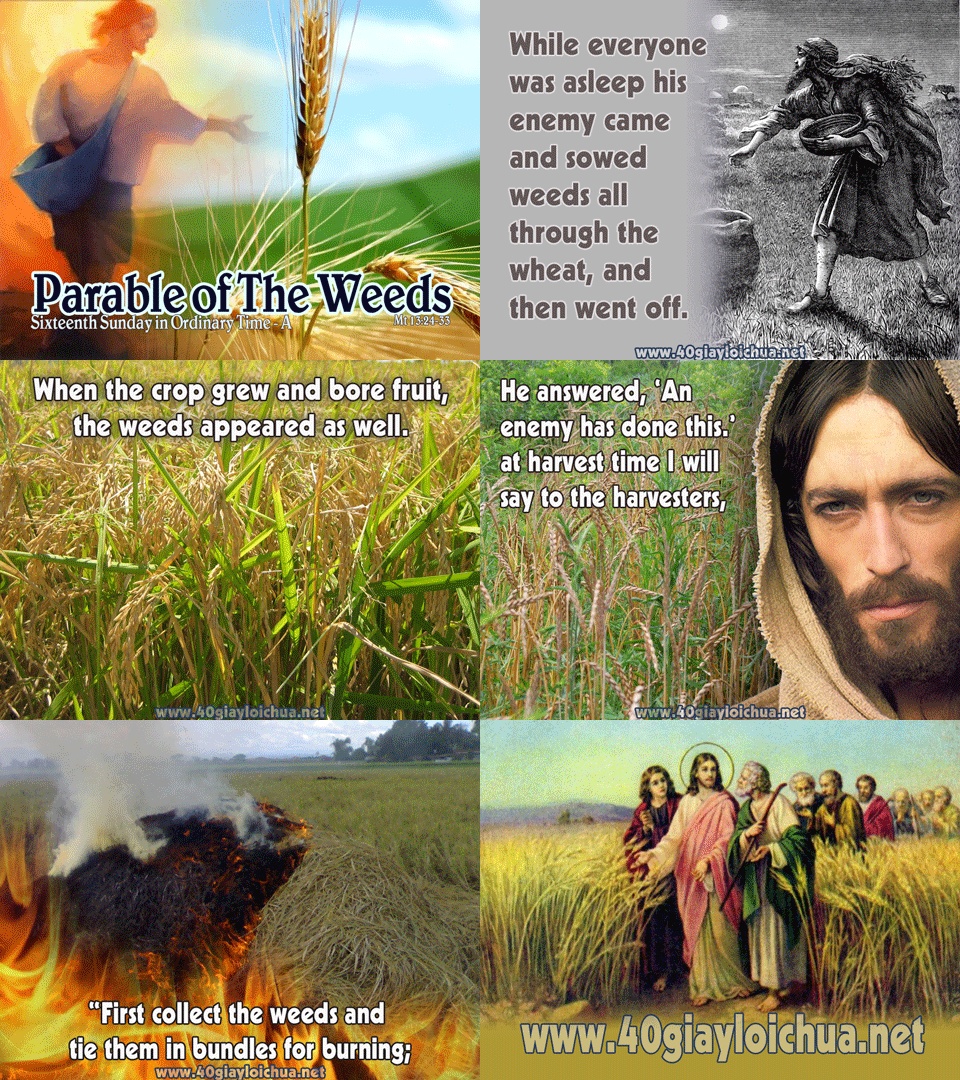
The readings for today, encourage us to be patient. In the Gospel, Jesus speaks of the wheat and the weeds growing together until the harvest. The temptation is to want everything sorted out immediately – every problem solved; every uncertainty removed. Yet the wisdom of God is different from our own. We need to look at the story more carefully to understand why. Look at the weeds first. Consider that the weeds that have grown up in the wheat field are an annual grass that looks very much like wheat. Distinguishing one from another in the early stages of growth is practically impossible. Moreover, as the plants mature, the roots of weeds and wheat intertwine and become almost inseparable. Yet separating them is necessary. Unless the weeds are removed, the flour made from the wheat will be ruined by the weeds, which are both bitter and mildly toxic. The usual solution is to harvest the plants, spread them on a flat surface, and then remove the weeds, which by this time are a different colour than the wheat. So, the weeds can be separated only at the proper time, following the harvest. This brings us to what the landowner says, “Let both of them grow together until the harvest.” This teaching now makes sense to us, hopefully, in the context of wheat growing in a field where there are also weeds. Where it dismays us is elsewhere in the world. Looking at the news, it might seem to many of us that weeds are growing like crazy in the wheatfield of the world! There are plants we may want to take out by the roots. We want the field of the world to flourish with wheat, and not to be troubled with weeds. That does not seem too much to ask. The pervasive evil in the world can lead to a feeling of despair about God: Why doesn’t God do something about these people? Where is God when people commit horrible crimes? The parable does not deny that there are weeds in the wheat. It does not suggest for a moment that the world is free from evil. Instead, the weeds are only too visible. The landowner knows what’s happened: “An enemy has done this!” Yes, the world is a terrible, broken place. What is meant to be a wheat field is hosting countless weeds. And yet we hear from the landowner this instruction: “Let both grow together until the harvest.” This sounds like the landowner is resigned to letting his fertile field become little more than a weed patch. But now we must look carefully at a word. The word is one which is often rendered “let”: “Let both grow together until the harvest.” The original Greek word has a wide range of meanings. One major meaning is “let” as in the sense of “pardon” or “forgive.” This parable invites us to the patience of discipleship. The very real evil that others do is not to be answered by pulling out the weeds, by attacking and destroying the people responsible. Doing so only adds to the harm. Instead, our response is to be one of forgiveness, and a willingness to trust in the purposes of God who will winnow the wheat and the weeds at the harvest time. The passage goes on to explain that once this harvest is in, the weeds will be recognized for what they are and thrown into the fire. There’s mercy, yes, but there’s also justice. Why this delay, then? Everywhere in the world, the weeds and the wheat are growing together, sometimes in dramatic, horrible ways; sometimes in ugly, everyday ways. Why not do something about it now? St. Augustine, in commenting on this parable asks and answers the same question: “There is this difference between people and real grain and real weeds, for what was grain in the field is grain and what were weeds are weeds. But in the Lord’s field, which is the Church, at time what was grain turns into weeds, and at times what were weeds turn into grain; and no one knows what they will be tomorrow.” God gives us all amazing latitude to make choices, to do right, even to do wrong, to the point of inflicting grievous harm on others and on ourselves. The most convincing entry in this record is the story of Jesus. Nowhere does he even suggest that in this life we get paid back in kind for the evil we have done. Instead, he goes around telling strange parables about patience and forgiveness, like the one about a landowner who suffers the weeds and wheat to grow together through the many months leading up to harvest. When his enemies nail him to the cross, he forgives them. Risen from the dead, he forgives those disciples who skipped out in his hour of need. Forgiveness and forbearance are God’s way of working with our broken world. Our preoccupation with the problem of weeds must not prevent us from recognizing the wondrous conclusion of the parable: how indeed the harvest happens, an abundance of wheat is gathered in, enough to make landowner and farm hands rejoice together. And so, the parable ends on a note of brilliant triumph about that harvest: Then the virtuous will shine like the sun in the kingdom of their Father. Listen, anyone who has ears!
- Yesterday
-
L3.3 Je vous salut Marie, pleine de grace, le Seigneur est avec vous, vous etes benie entres toutes les femmes et Jesus, le fruit de vos entrailles est beni. Sainte Marie, Mere de Dieu, priez pour nous pecheurs, maintenant et a l'heure de notre mort. Amen
- Last week
-
L3.2 Je vous salut Marie, pleine de grace, le Seigneur est avec vous, vous etes benie entres toutes les femmes et Jesus, le fruit de vos entrailles est beni. Sainte Marie, Mere de Dieu, priez pour nous pecheurs, maintenant et a l'heure de notre mort. Amen
-
scrambled message
-
Our Lady of the Mississippi Trappistines On June 13, 2026, Feast of the Immaculate Heart of Mary, Sister Marie Madeleine Beverly made solemn profession at the Missisippi Abbey (USA). Sister Madeleine was born in Jacksonville, Florida, USA in 1989; she entered Mississippi in 2018 and made first profession in 2021. St Mary's Abbey Glencairn Trappistines On July 11, 2026, The Solemnity of Saint Benedict, Sister Beatrice Brady made solemn profession at St Mary’s Abbey of Glencairn (Ireland). Sister Beatrice was born in Ireland in 1995. She entered Glencairn in 2018 and made first profession in 2021


-

Male Equivalent to Consecrated Virgin
Filia Dei replied to CountrySteve937's topic in Catholic Vocation Station
I think one could do this through private vows, and definitely still live those vows in the world, but then the vows would be, well, private. But depending on your workplace/role it may be a blessing for it to be private, too - like a Catholic ninja, as my old pastor used to say during Lent. -

Male Equivalent to Consecrated Virgin
KaytePost replied to CountrySteve937's topic in Catholic Vocation Station
I think the closest thing would be to join a Secular Institute. They make vows of poverty, chastity and obedience, but live in the world as a lay person. They are connected to a larger community, however live independently. They typically have monthly meetings either in person or virtual, and have a specific prayer commitment daily. Unlike CV life, they do have a specific charism or spirituality within the institute, and a bit more of a formal formation. -
Does anyone know if there's a male equivalent to being a consecrated virgin? I don't necessarily mean adopting the feminine spirituality per se, but rather is there a state of life where men can make public vows of celibacy (and poverty and obedience) while still living in the world?
-
Happy birthday wish you wish you were here
-
scrambled egg
-

Prayers for Abortion Survivor and Her Mother
little2add replied to tinytherese's topic in Catholic Open Mic
Pregnancy is divided into three trimesters, each lasting about 13 weeks. First Trimester Duration: Weeks 1 to 13 Key developments: Fertilization, implantation, and early fetal development. Common symptoms include nausea and fatigue. Second Trimester Duration: Weeks 14 to 27 Key developments: Rapid growth of the fetus, development of organs, and noticeable physical changes in the mother. Symptoms may include reduced nausea and increased energy. Third Trimester Duration: Weeks 28 to 40 Key developments: Final growth and maturation of the fetus, preparing for birth. Common symptoms include discomfort and increased frequency of contractions Second Trimester / 23 weeks truly heinous -
Coming to Terms with the Cloister
CountrySteve937 replied to Filia Dei's topic in Catholic Vocation Station
I spent some time discerning with an order of hermits, in the Carmelite tradition. I miss that life terribly some nights, but it wasn't God's plan for my life. I think we often complicate discernment. Our vocation is to holiness. To become a saint. Now, depending on your life/ what opportunities you have, there's a variety of different means to that end. When young/ given the choice between multiple different hypothetical states of life, it's important to follow your inclinations. You pick a vocation because of love/desire. Cloistered life is a radical living out of what Matthew 19:29. It's a radical choice to live out the phrase "God alone." Not everybody is called to such a life, but for those who are they are called to "die." The desert fathers saw themselves as "martyrs of conscience" and that's what you'll end up becoming. Even when you join and your family occasionally visits, it's less so they're visiting their daughter and more so like when a family goes to the tomb of a deceased loved one. The monastery is your mausoleum and the habit is your tombstone. There's no way to sugarcoat this without in some way lying to you. Same with your parents. Just as people need to grieve when they lose someone they love, so, too, will your parents and loved ones need to grieve your loss. Despite this chasm between you and the world/ your family, you can still love them. And reassure them of such. I wish there was an easy explanation to give to those who don't understand religious life or how it can beckon the hearts of some. Your choice will open two paths to your family: either hatred of God or eventual acceptance. And only experience/ time can be the teacher of these lessons. - Earlier
-
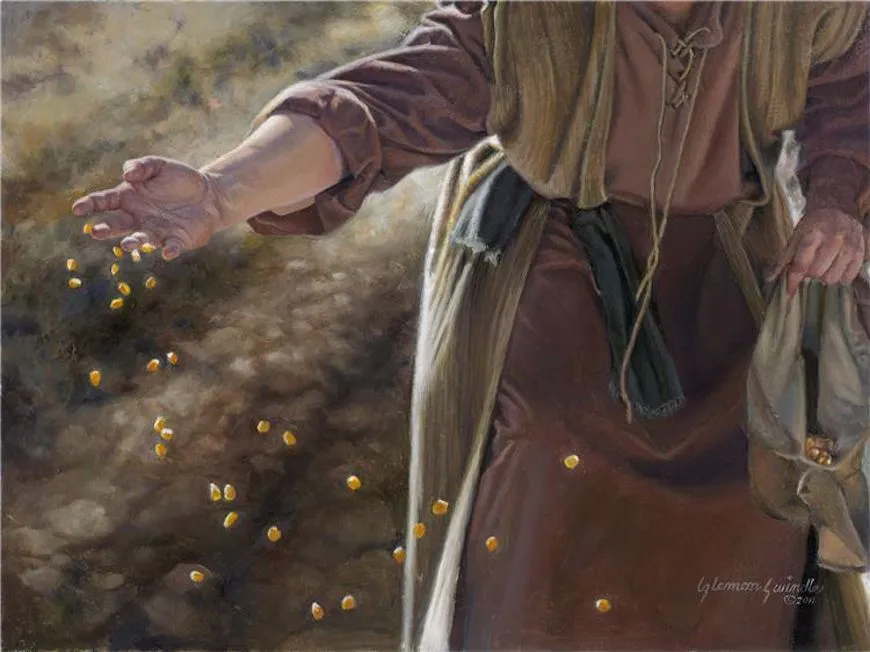
Today and for two more Sundays in July, we will be focusing on the third discourse in Matthew. The parable of the Sower is complemented today by our first reading from Isaiah in which we hear the assurance that God’s Word “shall not return to me void but shall do my will achieving the end for which I sent it.” Isaiah testifies that God’s Word in itself is fruitful, not because of any human achievement, but because it is of God, and so is powerful, alive and at work in the world. Jesus confirms what Isaiah said and offers assurance that eventually, despite the meagre signs of success and his disciples’ disappointment, the harvest will be astounding and surprising. But perhaps Jesus has another word for us in this parable: Jesus has an invitation for us to be sowers and not just soil. For the early Church, for those in whom the word of the kingdom initially took root and brought healing, peace, and joy, there was still a conundrum: why doesn’t everyone who hears the word believe? What’s wrong here? We may wonder some of the same things. Faith in Jesus is important to us. We go to church. Why doesn’t everyone? Why are we the minority in our community, showing up, giving, serving, while all around us there are people who choose sports or coffee or sleep over what makes sense to us? Why are churches getting smaller or struggling? Is there something wrong with the word? Is the seed not what we thought it was? Are we wasting our time? To the first disciples, to the early Church, to us, Jesus says, there is nothing wrong with the seed. The sower is dependable. But here’s what happens when the seed falls on different kinds of ground. Trust the sower. Trust the seed. Be good soil. Be good soil but take a clue from the sower. The sower’s approach to sowing is carefree, to say the least. The sower flings seed as he goes, with seeming disregard for where the seed will end up. To this sower, it’s as if the seed is so precious, he can’t hold on to it—it has to be shared. To hold onto the seed would be to squander it. This sower’s method seems to be to fling the seed as he goes, letting it land where it will, and keep going. This sower covers a lot of ground, not sticking to one pathway or field or territory. The point, for this sower, is to sow. So, he does. What if Jesus’ word for us has as much to do with the sower as the soil? The sower is often taken to be God or Jesus, and that’s a good analogy. God in Jesus flung the seed of the word of the kingdom wherever he went, and it found good soil in some places where others thought nothing good or holy could grow. God in Jesus never said a word about some people deserving to hear good news and others not. Jesus sowed the word of the kingdom, wherever he went. He was even buried like a seed in the soil, and from that sowing, God brought forth an unimaginable harvest. But in the explanation of the parable, Jesus doesn’t say, “I am the sower.” He just says that the sower sows the word, wherever the sower is, wherever the sower goes, and sometimes the word gets snatched away by the devil, and sometimes people fall away because the following is costly and risky, and sometimes the cares of the world choke the word, and sometimes, sometimes, the word bears a ridiculously abundant harvest. What if Jesus is not only saying to be good soil, to be open and receptive, to let dead and death-dealing ideas die, and to welcome all that is holy and life-giving to make room and a hospitable reception for the word? What if Jesus is also saying, “Sow!” Don’t worry about whether you think the soil you’re walking over is good or bad, receptive or not. Don’t be saving up seed for the places you think will be the most fertile. This seed is so precious, it has to be shared, and there’s plenty more seed where that came from. Not every bit of fruitful sowing is going to happen in the tidy rows of our pews, although by God’s grace it can happen even there. We are gifted with the eyes and ears of faith that help us accept the mysterious workings of God. We are being offered something good we could never get on our own, the love of a gracious and lavish God who is not stingy in showing us the signs of that love.
-
bad egg
-
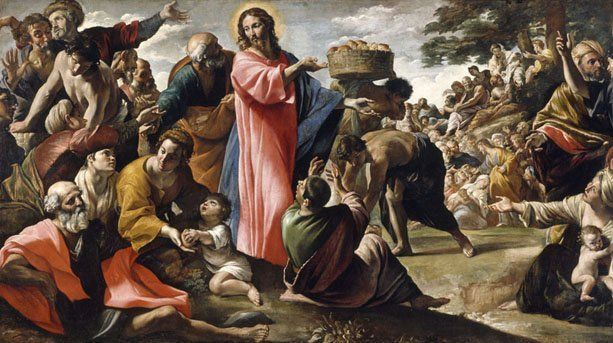
The Third Luminous Mystery The Proclamation of the Kingdom Le Troisieme Mystere Lumineux La Proclamation du Royaume Notre Pere, qui est au cieux, Que Ton nom soit sanctifier, Que Ton regne vienne, Que Ta volonter soit faite sur la terre comme au ciel Donnes-nous aujourd'hui, notre pain de ce jours. Pardonnes-nous nos offenses comme nous pardonnons aussi a ceux qui nous ont offenser. Ne nous soumet pas a la tentation, mais delivres-nous du mal. Amen L3.1 Je vous salut Marie, pleine de grace, le Seigneur est avec vous, vous etes benie entres toutes les femmes et Jesus, le fruit de vos entrailles est beni. Sainte Marie, Mere de Dieu, priez pour nous pecheurs, maintenant et a l'heure de notre mort. Amen
-
2026 Entrances, Vows, and Ordinations
KaytePost replied to Luigi's topic in Catholic Vocation Station
On July 4th the Sisters of Life had four first vows. https://www.instagram.com/p/DagSY1HD5Tz/?img_index=1 -
Conception Abbey (Benedictine monks) in northwest Missouri received five postulants today. They currently have one novice and six monks in simple vows. https://www.facebook.com/photo?fbid=1457066953129001&set=pcb.1457067079795655
-
I remain in communion with Rome and pray all will come to do the same. That is all the opinion I have on the matter.
-
Gloire au Pere et au Fils et au Saint Esprit, comme il etait au commencement, maintenant et toujours, pour les siecles des siecles. Amen Oh Mon Jesus, pardonnes-nous nos pechers, preserves nous des feux de l'enfer, conduisez au ciel toutes les ames, specialement celles qui ont le plus besoin de Ta misericorde. Amen Notre Pere, qui est au cieux, que Ton nom soit sanctifier, que Ton regne vienne, que Ta volonter soit faite sur la terre comme au ciel. Donnes nous aujord'hui, notre pain de ce jours, pardonnes nous nos offenses, comme nous pardonnons aussi a ceux qui nous ont offenser. Ne nous soumet pas a la tentation, mais delivres-nous du mal. Amen
-
The SSPX is good at "double speak." They claim to possess "filial obedience" to the pope, but then disobey him and the church?
-
L2.10 Je vous salut Marie, pleine de grace, le Seigneur est avec vous, vous etes benie entres toutes les femmes et Jesus, le fruit de vos entrailles est beni. Sainte Marie, Mere de Dieu, priez pour nous pecheurs, maintenant et a l'heure de notre mort. Amen
-
Bad liar
-
compulsive liar
-
L2.9 Je vous salut Marie, pleine de grace, le Seigneur est avec vous, vous etes benie entres toutes les femmes et Jesus, le fruit de vos entrailles est beni. Sainte Marie, Mere de Dieu, priez pour nous pecheurs, maintenant et a l'heure de notre mort. Amen