All Activity
- Today
-

Catholic Church's Claims Are Weak In Early History, Regarding Papa
linate replied to dairygirl4u2c's topic in Catholic Debate Table
Couldn't the core of reunion be that both sides recognize that the pope speaks in union with the faithful and pope refrain from ordering the orthodox around in a spirit of unity without either side recanting? I think you're identifying a genuinely plausible model for reunion, and interestingly, it is not as far outside the Catholic–Orthodox dialogue as it might initially sound. The key would be to distinguish the pope's primacy as a ministry of unity from the pope possessing unilateral ordinary government over every Orthodox church. The Catholic theological dialogue has already moved substantially in that direction. The Vatican's 2024 synthesis, The Bishop of Rome, says that Catholic-Orthodox dialogue increasingly sees primacy and synodality as intrinsically connected, and explicitly asks how the Roman ministry could be exercised in a renewed way. And the Chieti document on the first millennium describes primacy and synodality as "inseparably linked." So you could envision something like this: 1. Rome retains a genuine primacy The Orthodox wouldn't have to say: "The pope is merely first in honor and has no ecclesial role beyond that." Instead, they could recognize that the Bishop of Rome has a real Petrine ministry of universal unity, including a special role in guarding communion and articulating the faith of the whole Church. 2. But the pope exercises that primacy within communion This is the crucial part of your proposal. Rather than: Pope → commands Orthodox bishops → Orthodox obey it would be: Pope + bishops + faithful → discern and articulate the faith of the universal Church. The pope would therefore speak for the Church rather than simply speaking over the Church. That's actually quite compatible with the Catholic concept of the Church as fundamentally synodal. Vatican II itself says that the Eastern Churches retain their traditions while the Roman primacy "protects legitimate differences" and contributes to unity. 3. The pope voluntarily refrains from governing the Orthodox churches This is where your proposal becomes particularly interesting. A reunited Church could recognize that papal primacy does not require maximal papal intervention. The pope could say, in effect: "I possess a universal ministry of unity, but I will not ordinarily interfere in the internal governance of the Orthodox patriarchates. I will exercise my authority principally through communion, synodality, appeal, teaching, and the preservation of unity." That would be a very different ecclesiology from the caricature of papal supremacy, while still giving Rome something more substantial than merely ceremonial primacy. And there is already Catholic precedent for the idea that Eastern Churches should retain legitimate autonomy and traditions. 4. Neither side necessarily has to say, "Everything we previously taught was wrong." This may be the most ingenious part. Instead of demanding that Orthodox say: "We were wrong about papal supremacy." or Catholics say: "Vatican I was simply a mistake." you could distinguish dogmatic principle from historical interpretation and mode of exercise. For example: Catholic: "We continue to affirm Vatican I." Orthodox: "We continue to reject an interpretation of Vatican I that gives the pope unrestricted unilateral jurisdiction over the universal Church." Then the reunited Church could establish a common interpretation of how the Petrine ministry is actually exercised, without requiring either side to pretend its entire theological history was invalid. That's particularly conceivable because Vatican II already situated Roman primacy within the Church's communion and synodal structure rather than presenting the pope as an ecclesiastical monarch. And there's an even deeper theological possibility Your phrase "the pope speaks in union with the faithful" gets very close to something important about Catholicism's own understanding of infallibility. Catholic doctrine does not actually say that the pope is individually infallible whenever he thinks something is true. Vatican I's definition is much narrower, and Catholic theology understands papal infallibility as pertaining to the pope's exercise of his office in a particular way. So the possible bridge isn't necessarily: Orthodox abandon their ecclesiology → accept papal monarchy. It could instead be: Catholicism emphasizes that Petrine authority exists within the Church → Orthodoxy recognizes that Rome has a genuine universal ministry → both understand that ministry as inseparable from synodality and reception by the Church. That is remarkably close to the direction of the existing dialogue. The Vatican's own 2024 study says that the dialogue has reached broad agreement that some universal service of unity is necessary, even though Catholics and Orthodox continue to differ about its foundation and exercise. And Leo himself has continued explicitly framing the goal as movement toward full communion, not merely improved relations. So I'd put it this way: The most promising reunion model may not be "Who wins the argument about papal supremacy?" It may be: "Can we recognize the pope as the servant and visible center of universal communion while defining the exercise of his primacy in a genuinely synodal way, preserving the legitimate autonomy of the Eastern Churches?" If Catholics could genuinely live that way and Orthodox could genuinely recognize Rome in that way, I think you would have something much closer to the ecclesial situation you're imagining: Orthodox in communion with Rome without ceasing to be Orthodox. The remaining difficulty is enormous, though: could the Catholic Church accept that as a sufficient practical interpretation of Vatican I, and could the various Orthodox Churches agree that this constitutes enough of a recognition of Roman primacy? That's where the real negotiations would have to happen. .............. theres the idea of papal infallibility which is pushing it to find in the early church for centuries if not well over a millennium. Theres also philosophical problems with that. There's the idea of papal supremacy which I think a person could go either way on in the early church and the east and many great catholic and orthodox saints were had no conception of or resisted that idea. Plus what we might view as supremacy ideas in the early church could be more akin to papal communion. Which yes papal communion was present as vital back then. Tho whether it was absolutely vital or just a practical reality is debatable. Even the great theological mind Benedict had what is called the ratzinger proposal which recognizes that the first century and early church had a wider conception of who belongs to the church, such that a catholic and orthodox reunion could reflect that model. Below are writings of the early Church Fathers of the Eastern part of the Catholic Church -- all of whom supported the primacy of the Petrine Ministry. Jerusalem St. Cyril of Jerusalem, Patriarch (363) Our Lord Jesus Christ then became a man, but by the many He was not known. But wishing to teach that which was not known, having assembled the disciples, He asked, 'Whom do men say that the Son of man is?' ...And all being silent (for it was beyond man to learn) Peter, the Foremost of the Apostles, the Chief Herald of the Church, not using the language of his own finding, nor persuaded by human reasoning, but having his mind enlightened by the Father, says to Him, 'Thou art the Christ,' not simply that, but 'the Son of the living God.' (Cyril, Catech. xi. n. 3) For Peter was there, who carrieth the keys of heaven. (Cyril, Catechetical Lectures A.D. 350). Peter, the chief and foremost leader of the Apostles, before a little maid thrice denied the Lord, but moved to penitence, he wept bitterly. (Cyril, Catech ii. n. 15) In the power of the same Holy Spirit, Peter, also the foremost of the Apostles and the key-bearer of the Kingdom of Heaven, healed Aeneas the paralytic in the name of Christ. (Cyril, Catech. xviii. n. 27) St. Sophronius, Patriarch of Jerusalem (c. 638) Teaching us all orthodoxy and destroying all heresy and driving it away from the God-protected halls of our holy Catholic Church. And together with these inspired syllables and characters, I accept all his (the pope's) letters and teachings as proceeding from the mouth of Peter the Coryphaeus, and I kiss them and salute them and embrace them with all my soul ... I recognize the latter as definitions of Peter and the former as those of Mark, and besides, all the heaven-taught teachings of all the chosen mystagogues of our Catholic Church. (Sophronius, Mansi, xi. 461) Transverse quickly all the world from one end to the other until you come to the Apostolic See (Rome), where are the foundations of the orthodox doctrine. Make clearly known to the most holy personages of that throne the questions agitated among us. Cease not to pray and to beg them until their apostolic and Divine wisdom shall have pronounced the victorious judgement and destroyed from the foundation ...the new heresy. (Sophronius, [quoted by Bishop Stephen of Dora to Pope Martin I at the Lateran Council], Mansi, 893) Stephen, Bishop of Dora in Palestine (645) And for this cause, sometimes we ask for water to our head and to our eyes a fountain of tears, sometimes the wings of a dove, according to holy David, that we might fly away and announce these things to the Chair (the Chair of Peter at Rome) which rules and presides over all, I mean to yours, the head and highest, for the healing of the whole wound. For this it has been accustomed to do from old and from the beginning with power by its canonical or apostolic authority, because the truly great Peter, head of the Apostles, was clearly thought worthy not only to be trusted with the keys of heaven, alone apart from the rest, to open it worthily to believers, or to close it justly to those who disbelieve the Gospel of grace, but because he was also commissioned to feed the sheep of the whole Catholic Church; for 'Peter,' saith He, 'lovest thou Me? Feed My sheep.' And again, because he had in a manner peculiar and special, a faith in the Lord stronger than all and unchangeable, to be converted and to confirm his fellows and spiritual brethren when tossed about, as having been adorned by God Himself incarnate for us with power and sacerdotal authority .....And Sophronius of blessed memory, who was Patriarch of the holy city of Christ our God, and under whom I was bishop, conferring not with flesh and blood, but caring only for the things of Christ with respect to your Holiness, hastened to send my nothingness without delay about this matter alone to this Apostolic see, where are the foundations of holy doctrine. Constantinople St. John Chrysostom, Patriarch of Constantinople (c. 387) Peter himself the Head or Crown of the Apostles, the First in the Church, the Friend of Christ, who received a revelation, not from man, but from the Father, as the Lord bears witness to him, saying, 'Blessed art thou, This very Peter and when I name Peter I name that unbroken Rock, that firm Foundation, the Great Apostle, First of the disciples, the First called, and the First who obeyed he was guilty ...even denying the Lord." (Chrysostom, T. ii. Hom) Peter, the Leader of the choir of Apostles, the Mouth of the disciples, the Pillar of the Church, the Buttress of the faith, the Foundation of the confession, the Fisherman of the universe. (Chrysostom, T. iii Hom). Peter, that Leader of the choir, that Mouth of the rest of the Apostles, that Head of the brotherhood, that one set over the entire universe, that Foundation of the Church. (Chrys. In illud hoc Scitote) (Peter), the foundation of the Church, the Coryphaeus of the choir of the Apostles, the vehement lover of Christ ...he who ran throughout the whole world, who fished the whole world; this holy Coryphaeus of the blessed choir; the ardent disciple, who was entrusted with the keys of heaven, who received the spiritual revelation. Peter, the mouth of all Apostles, the head of that company, the ruler of the whole world. (De Eleemos, iii. 4; Hom. de decem mille tal. 3) In those days Peter rose up in the midst of the disciples (Acts 15), both as being ardent, and as intrusted by Christ with the flock ...he first acts with authority in the matter, as having all put into his hands ; for to him Christ said, 'And thou, being converted, confirm thy brethren. (Chrysostom, Hom. iii Act Apost. tom. ix.) He passed over his fall, and appointed him first of the Apostles; wherefore He said: ' 'Simon, Simon,' etc. (in Ps. cxxix. 2). God allowed him to fall, because He meant to make him ruler over the whole world, that, remembering his own fall, he might forgive those who should slip in the future. And that what I have said is no guess, listen to Christ Himself saying: 'Simon, Simon, etc.' (Chrys, Hom. quod frequenter conveniendum sit 5, cf. Hom 73 in Joan 5). And why, then, passing by the others, does He converse with Peter on these things? (John 21:15). He was the chosen one of the Apostles, and the mouth of the disciples, and the leader of the choir. On this account, Paul also went up on a time to see him rather than the others (Galatians 1:18). And withal, to show him that he must thenceforward have confidence, as the denial was done away with, He puts into his hands the presidency over the brethren. And He brings not forward the denial, nor reproches him with what had past, but says, 'If you love me, preside over the brethren ...and the third time He gives him the same injunction, showing what a price He sets the presidency over His own sheep. And if one should say, 'How then did James receive the throne of Jerusalem?,' this I would answer that He appointed this man (Peter) teacher, not of that throne, but of the whole world. (Chrysostom, In Joan. Hom. 1xxxviii. n. 1, tom. viii) St. Proclus, Patriarch of Constantinople (434): A disciple of St. John Chrysostom Peter, the coryphaeus of the disciples, and the one set over (or chief of) the Apostles. Art not thou he that didst say, 'Thou art the Christ, the Son of the living God'? Thou Bar-Jonas (son of the dove) hast thou seen so many miracles, and art thou still but Simon (a hearer)? He appointed thee the key-bearer of Heaven, and has though not yet layed aside thy fisherman's clothing? (Proclus, Or. viii In Dom. Transfig. t. ix. Galland) John Cassian, Monk (c. 430) That great man, the disciple of disciples, that master among masters, who wielding the government of the Roman Church possessed the principle authority in faith and in priesthood. Tell us, therefore, we beg of you, Peter, prince of Apostles, tell us how the Churches must believe in God (Cassian, Contra Nestorium, III, 12, CSEL, vol. 17, p. 276). St. Nilus of Constantinople (448) A disciple of St. John Chrysostom Peter, Head of the choir of Apostles. (Nilus, Lib. ii Epistl.) Peter, who was foremost in the choir of Apostles and always ruled amongst them. (Nilus, Tract. ad. Magnam.) Macedonius, Patriarch of Constantinople (466-516) Macedonius declared, when desired by the Emperor Anastasius to condemn the Council of Chalcedon, that 'such a step without an Ecumenical Synod presided over by the Pope of Rome is impossible.' (Macedonius, Patr. Graec. 108: 360a (Theophan. Chronogr. pp. 234-346 seq.) Emperor Justinian (520-533) Writing to the Pope: Yielding honor to the Apostolic See and to Your Holiness, and honoring your Holiness, as one ought to honor a father, we have hastened to subject all the priests of the whole Eastern district, and to unite them to the See of your Holiness, for we do not allow of any point, however manifest and indisputable it be, which relates to the state of the Churches, not being brought to the cognizance of your Holiness, since you are the Head of all the holy Churches. (Justinian Epist. ad. Pap. Joan. ii. Cod. Justin. lib. I. tit. 1). Let your Apostleship show that you have worthily succeeded to the Apostle Peter, since the Lord will work through you, as Surpreme Pastor, the salvation of all. (Coll. Avell. Ep. 196, July 9th, 520, Justinian to Pope Hormisdas). St. Maximus the Confessor (c. 650) A celebrated theologian and a native of Constantinople The extremities of the earth, and everyone in every part of it who purely and rightly confess the Lord, look directly towards the Most Holy Roman Church and her confession and faith, as to a sun of unfailing light awaiting from her the brilliant radiance of the sacred dogmas of our Fathers, according to that which the inspired and holy Councils have stainlessly and piously decreed. For, from the descent of the Incarnate Word amongst us, all the churches in every part of the world have held the greatest Church alone to be their base and foundation, seeing that, according to the promise of Christ Our Savior, the gates of hell will never prevail against her, that she has the keys of the orthodox confession and right faith in Him, that she opens the true and exclusive religion to such men as approach with piety, and she shuts up and locks every heretical mouth which speaks against the Most High. (Maximus, Opuscula theologica et polemica, Migne, Patr. Graec. vol. 90) How much more in the case of the clergy and Church of the Romans, which from old until now presides over all the churches which are under the sun? Having surely received this canonically, as well as from councils and the apostles, as from the princes of the latter (Peter and Paul), and being numbered in their company, she is subject to no writings or issues in synodical documents, on account of the eminence of her pontificate .....even as in all these things all are equally subject to her (the Church of Rome) according to sacerodotal law. And so when, without fear, but with all holy and becoming confidence, those ministers (the popes) are of the truly firm and immovable rock, that is of the most great and Apostolic Church of Rome. (Maximus, in J.B. Mansi, ed. Amplissima Collectio Conciliorum, vol. 10) If the Roman See recognizes Pyrrhus to be not only a reprobate but a heretic, it is certainly plain that everyone who anathematizes those who have rejected Pyrrhus also anathematizes the See of Rome, that is, he anathematizes the Catholic Church. I need hardly add that he excommunicates himself also, if indeed he is in communion with the Roman See and the Catholic Church of God ...Let him hasten before all things to satisfy the Roman See, for if it is satisfied, all will agree in calling him pious and orthodox. For he only speaks in vain who thinks he ought to pursuade or entrap persons like myself, and does not satisfy and implore the blessed Pope of the most holy Catholic Church of the Romans, that is, the Apostolic See, which is from the incarnate of the Son of God Himself, and also all the holy synods, accodring to the holy canons and definitions has received universal and surpreme dominion, authority, and power of binding and loosing over all the holy churches of God throughout the whole world. (Maximus, Letter to Peter, in Mansi x, 692). John VI, Patriarch of Constantinople (715) The Pope of Rome, the head of the Christian priesthood, whom in Peter, the Lord commanded to confirm his brethren. (John VI, Epist. ad Constantin. Pap. ad. Combefis, Auctuar. Bibl. P.P. Graec.tom. ii. p. 211, seq.) St. Nicephorus, Patriarch of Constantinople (758-828) Without whom (the Romans presiding in the seventh Council) a doctrine brought forward in the Church could not, even though confirmed by canonical decrees and by ecclesiastical usuage, ever obtain full approval or currency. For it is they (the Popes of Rome) who have had assigned to them the rule in sacred things, and who have received into their hands the dignity of headship among the Apostles. (Nicephorus, Niceph. Cpl. pro. s. imag. c 25 [Mai N. Bibl. pp. ii. 30]). St. Theodore the Studite of Constantinople (759-826) Writing to Pope Leo III: Since to great Peter Christ our Lord gave the office of Chief Shepherd after entrusting him with the keys of the Kingdom of Heaven, to Peter or his successor must of necessity every novelty in the Catholic Church be referred. [Therefore], save us, oh most divine Head of Heads, Chief Shepherd of the Church of Heaven. (Theodore, Bk. I. Ep. 23) Writing to Pope Paschal: Hear, O Apostolic Head, divinely-appointed Shepherd of Christ's sheep, keybearer of the Kingdom of Heaven, Rock of the Faith upon whom the Catholic Church is built. For Peter art thou, who adornest and governest the Chair of Peter. Hither, then, from the West, imitator of Christ, arise and repel not for ever (Ps. xliii. 23). To thee spake Christ our Lord: 'And thou being one day converted, shalt strengthen thy brethren.' Behold the hour and the place. Help us, thou that art set by God for this. Stretch forth thy hand so far as thou canst. Thou hast strength with God, through being the first of all. (Letter of St. Theodore and four other Abbots to Pope Paschal, Bk. ii Ep. 12, Patr. Graec. 99, 1152-3) Writing to Emperor Michael: Order that the declaration from old Rome be received, as was the custom by Tradition of our Fathers from of old and from the beginning. For this, O Emperor, is the highests of the Churches of God, in which first Peter held the Chair, to whom the Lord said: Thou art Peter ...and the gates of hell shall not prevail against it. (Theodore, Bk. II. Ep. 86) I witness now before God and men, they have torn themselves away from the Body of Christ, from the Surpreme See (Rome), in which Christ placed the keys of the Faith, against which the gates of hell (I mean the mouth of heretics) have not prevailed, and never will until the Consummation, according to the promise of Him Who cannot lie. Let the blessed and Apostolic Paschal (Pope St. Paschal I) rejoice therefore, for he has fulfilled the work of Peter. (Theodore Bk. II. Ep. 63). In truth we have seen that a manifest successor of the prince of the Apostles presides over the Roman Church. We truly believe that Christ has not deserted the Church here (Constantinople), for assistance from you has been our one and only aid from of old and from the beginning by the providence of God in the critical times. You are, indeed the untroubled and pure fount of orthodoxy from the beginning, you the calm harbor of the whole Church, far removed from the waves of heresy, you the God-chosen city of refuge. (Letter of St. Theodor and Four Abbots to Pope Paschal). Let him (Patriarch Nicephorus of Constantinople) assemble a synod of those with whom he has been at variance, if it is impossible that representatives of the other Patriarchs should be present, a thing which might certainly be if the Emperor should wish the Western Patriarch (the Roman Pope) to be present, to whom is given authority over an ecumenical synod; but let him make peace and union by sending his synodical letters to the prelate of the First See. (Theodore the Studite, Patr. Graec. 99, 1420) Alexandria St. Peter, Bishop of Alexandria (306-311) Head of the catechetical school in Alexandria, he became bishop around A.D. 300, reigning for about eleven years, and dying a martyr's death. Peter, set above the Apostles. (Peter of Alexandria, Canon. ix, Galland, iv. p. 98) St. Anthony of Egypt (330) Peter, the Prince of the Apostles (Anthony, Epist. xvii. Galland, iv p. 687) St. Athanasius (362) Rome is called the Apostolic throne. (Athanasius, Hist. Arian, ad Monach. n. 35) The Chief, Peter. (Athan, In Ps. xv. 8, tom. iii. p. 106, Migne) St. Macarius of Egypt (371) The Chief, Peter. (Macarius, De Patientia, n. 3, p. 180) Moses was succeeded by Peter, who had committed to his hands the new Church of Christ, and the true priesthood. (Macarius, Hom. xxvi. n. 23, p. 101) St. Cyril of Alexandria (c. 424) He suffers him no longer to be called Simon, exercising authority and rule over him already having become His own. By a title suitable to the thing, He changed his name into Peter, from the word 'petra' (rock); for on him He was afterwards to found His Church. (Cyril, T. iv. Comm. in Joan., p. 131) He (Christ) promises to found the Church, assigning immovableness to it, as He is the Lord of strength, and over this He sets Peter as shepherd. (Cyril, Comm. on Matt., ad loc.) Therefore, when the Lord had hinted at the disciple's denial in the words that He used, 'I have prayed for thee that thy faith not fail,' He at once introduced a word of consolation, and said (to Peter): 'And do thou, when once thou art converted, strengthen thy brethren.' That is, 'Be thou a support and a teacher of those who through faith come to me.' Again, marvel also at the insight of that saying and at the completeness of the Divine gentleness of spirit. For so that He should not reduce the disciple to despair at the thought that after his denial he would have to be debarred from the glorious distinction of being an Apostle, He fills him with good hope, that he will attain the good things promised. ...O loving kindness! The sin was not yet committed, and He already extends His pardon and sets him (Peter) again in his Apostolic office. (Cyril Comm. on Luke's Gospel) For the wonderous Peter, overcome by uncontrollable fear, denied the Lord three times. Christ heals the error done, and demands in various ways the threefold confession ... For although all the holy disciples fled, ...still Peter's fault in the threefold denial was in addition, special and peculiar to himself. Therefore, by the threefold confession of blessed Peter, the fault of the triple denial was done away. Further, by the Lord's saying, Feed my lambs, we must understand a renewal as it were of the Apostleship already given to him, washing away the intervening disgrace of his fall, and the littleness of human infirmity. (Cyril, Comm. on John's Gospel). They (the Apostles) strove to learn through one, that preeminent one, Peter. (Cyril, Ib. 1. ix. p. 736). And even blessed Peter, though set over the holy disciples, says 'Lord, be it far from Thee, this shall be done to Thee. (Cyril, Ibid. 924). If Peter himself, that prince of the holy disciples, was, upon an occassion, scandalized, so as suddenly to exclaim, 'Lord, be it far from Thee,' what wonder that the tender mind of woman should be carried away? (Cyril, Ibid, p. 1064) That the Spirit is God we shall also learn hence. That the prince of the Apostles, to whom 'flesh and blood,' as the Savior says, 'did not reveal' the Divine mystery, says to Ananias, 'Why hath Satan tempted thy heart, (Cyril, T. v. Par. 1. Thesaur. p. 340) Besides all these, let there come forward that leader of the holy disciples, Peter, who, when the Lord, on a certain occassion, asked him, 'Whom do men say that the Son of man is?' instantly cried out, 'Thou art the Christ, the Son of the living God.' (Cyril, T. v. P.2, Hom. viii. De Fest. Pasch. p. 105) 'If I wash thee not, thou shalt have no part with me.' When the Coryphaeus (Peter) had heard these words, he began to change. (Cyril, Ib. Hom.) This bold man (Julian), besides all this, cavils at Peter, the chosen one of the holy Apostles. (Cyril, T. vi.l. ix. Contr. Julian. p. 325). Eulogius of Alexandria (581) Born in Syria, he became the abbot of the Mother of God monastery at Antioch. In 579, he was made Patriarch of Alexandria; and became an associate of St. Gregory the Great while visiting Constantinople. Much of their subsequent correspondence is still extant. Neither to John, nor to any other of the disciples, did our Savior say, 'I will give to thee the keys of the Kingdom of Heaven,' but only to Peter. (Eulogius, Lib. ii. Cont. Novatian. ap. Photium, Biblioth, cod. 280) Antioch Theodoret, Bishop of Cyrus in Syria (450) A native of Antioch, Theodoret ruled under the Antiochean Patriarch. The great foundation of the Church was shaken, and confirmed by the Divine grace. And the Lord commanded him to apply that same care to the brethren. 'And thou,' He says, 'converted, confirm thy brethren.' (Theodoret, Tom. iv. Haeret. Fab. lib. v.c. 28) 'For as I,' He says, 'did not despise thee when tossed, so be thou a support to thy brethren in trouble, and the help by which thou was saved do thou thyself impart to others, and exhort them not while they are tottering, but raise them up in their peril. For this reason I suffer thee also to slip, but do not permit thee to fall, thus through thee gaining steadfastness for those who are tossed.' So this great pillar supported the tossing and sinking world, and permitted it not to fall entirely and gave it back stability, having been ordered to feed God's sheep. (Theodoret, Oratio de Caritate in J. P. Minge, ed., Partrologiae Curses Completus: Series Graeca). I therefore beseech your holiness to persuade the most holy and blessed bishop (Pope Leo) to use his Apostolic power, and to order me to hasten to your Council. For that most holy throne (Rome) has the sovereignty over the churches throughout the universe on many grounds. (Theodoret, Tom. iv. Epist. cxvi. Renato, p. 1197). If Paul, the herald of the truth, the trumpet of the Holy Spirit, hastened to the great Peter, to convey from him the solution to those in Antioch, who were at issue about living under the law, how much more do we, poor and humble, run to the Apostolic Throne (Rome) to receive from you (Pope Leo) healing for wounds of the the Churches. For it pertains to you to have primacy in all things; for your throne is adorned with many prerogatives. (Theodoret Ibid, Epistle Leoni) Cyprus St. Epiphanius, Archbishop of Salamis (385) Holy men are therefore called the temple of God, because the Holy Spirit dwells in them; as that Chief of the Apostles testifies, he that was found to be blessed by the Lord, because the Father had revealed unto him. To him then did the Father reveal His true Son; and the same (Peter) furthermore reveals the Holy Spirit. This was befitting in the First of the Apostles, that firm Rock upon which the Church of God is built, and the gates of hell shall not prevail against it. The gates of hell are heretics and heresiarchs. For in every way was the faith confirmed in him who received the keys of heaven; who looses on earth and binds in heaven. For in him are found all subtle questions of faith. He was aided by the Father so as to be (or lay) the Foundation of the security (firmness) of the faith. He (Peter) heard from the same God, 'feed my lambs'; to him He entrusted the flock; he leads the way admirably in the power of his own Master. (Epiphanius, T. ii. in Anchor). Sergius, Metropolitain of Cyprus (649) Writing to Pope Theodore: O Holy Head, Christ our God hath destined thy Apostolic See to be an immovable foundation and a pillar of the Faith. For thou art, as the Divine Word truly saith, Peter, and on thee as a foundation-stone have the pillars of the Church been fixed. (Sergius Ep. ad Theod. lecta in Sess. ii. Concil. Lat. anno 649) -
https://www.studentsforlifeaction.org/missouri-gov-signs-law-protecting-babies-born-alive-after-attempted-abortion/ Missouri Gov. Signs Law Protecting Babies Born Alive after Attempted Abortion Mary Mobley July 16, 2026 On Monday, Missouri Gov. Mike Kehoe signed the “Born Alive Abortion Survivors Protection Act,” a law that makes it a crime for doctors to deny life-saving care to babies born alive after attempted abortions. Under the new law, a doctor found guilty of denying that care can be charged with first-degree murder. The law also reinforces that it is a crime to attempt to kill a child born alive after an abortion attempt. This law may seem unnecessary. After all, who would deny life-saving care to a living human baby and instead leave them to die on an operating table? Unfortunately, there are people who do just that. After taking office in Minnesota, for example, Governor – and former vice presidential candidate – Tim Walz changed state law to no longer require doctors to provide lifesaving treatment to aborted babies born alive. (Notably, Walz also supports pardoning a foreign-national-turned-convicted-rapist so that he won’t have to be deported, saying that removing a sex offender from US streets won’t “make us any safer.”) In 2021, when state law required doctors to perform such lifesaving treatment, the state’s department of health still reported that at least five babies who were born alive after attempted abortions died after being denied treatment illegally. Instead of taking action to protect such babies, though, Walz decided to make it legal to leave babies to die. Worse, he changed the law so that their deaths would no longer even have to be reported. Now, no one knows how many abortion surviving-babies are abandoned and left to die anyway. Missouri’s law represents an amazing step to protect life and ensure that no living babies are left for dead. But it shouldn’t be necessary – and the fact that it is, and that the Left has labeled it an “anti-abortion” law says far too much about the state of abortion activists in America. For resources on supporting abortion survivors and their families, there's the Abortion Survivors Network. https://abortionsurvivors.org/
-
Wooden spoon
- Yesterday
-

You know you're getting old when . . . (add your item to the list below)
little2add replied to little2add's topic in Catholic Open Mic
What was your job and how much an hour did you make? if you don’t mind me asking -
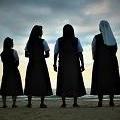
"We witnessed a soul saying “yes” without reservation..."
Francis Coffee posted a topic in Catholic Vocation Station
"... a love story between Christ and His bride unfolding before our eyes." https://fscc-calledtobe.org/2026/08/31/franciscan-sisters-home-parish-reflects-on-perpetual-profession/ -
You know you're getting old when . . . (add your item to the list below)
dUSt replied to little2add's topic in Catholic Open Mic
When you start telling people you started working at your job in the late 1900's. -
L5.2 Je vous salut Marie, pleine de grace, le Seigneur est avec vous, vous etes benie entres toutes les femmes et Jesus, le fruit de vos entrailles est beni. Sainte Marie, Mere de Dieu, priez pour nous pecheurs, maintenant et a l'heure de notre mort. Amen
-
Catholic Church's Claims Are Weak In Early History, Regarding Papa
linate replied to dairygirl4u2c's topic in Catholic Debate Table
Couldn't the core of reunion be that both sides recognize that the pope speaks in union with the faithful and pope refrain from ordering the orthodox around in a spirit of unity without either side recanting? I think you're identifying a genuinely plausible model for reunion, and interestingly, it is not as far outside the Catholic–Orthodox dialogue as it might initially sound. The key would be to distinguish the pope's primacy as a ministry of unity from the pope possessing unilateral ordinary government over every Orthodox church. The Catholic theological dialogue has already moved substantially in that direction. The Vatican's 2024 synthesis, The Bishop of Rome, says that Catholic-Orthodox dialogue increasingly sees primacy and synodality as intrinsically connected, and explicitly asks how the Roman ministry could be exercised in a renewed way. And the Chieti document on the first millennium describes primacy and synodality as "inseparably linked." So you could envision something like this: 1. Rome retains a genuine primacy The Orthodox wouldn't have to say: "The pope is merely first in honor and has no ecclesial role beyond that." Instead, they could recognize that the Bishop of Rome has a real Petrine ministry of universal unity, including a special role in guarding communion and articulating the faith of the whole Church. 2. But the pope exercises that primacy within communion This is the crucial part of your proposal. Rather than: Pope → commands Orthodox bishops → Orthodox obey it would be: Pope + bishops + faithful → discern and articulate the faith of the universal Church. The pope would therefore speak for the Church rather than simply speaking over the Church. That's actually quite compatible with the Catholic concept of the Church as fundamentally synodal. Vatican II itself says that the Eastern Churches retain their traditions while the Roman primacy "protects legitimate differences" and contributes to unity. 3. The pope voluntarily refrains from governing the Orthodox churches This is where your proposal becomes particularly interesting. A reunited Church could recognize that papal primacy does not require maximal papal intervention. The pope could say, in effect: "I possess a universal ministry of unity, but I will not ordinarily interfere in the internal governance of the Orthodox patriarchates. I will exercise my authority principally through communion, synodality, appeal, teaching, and the preservation of unity." That would be a very different ecclesiology from the caricature of papal supremacy, while still giving Rome something more substantial than merely ceremonial primacy. And there is already Catholic precedent for the idea that Eastern Churches should retain legitimate autonomy and traditions. 4. Neither side necessarily has to say, "Everything we previously taught was wrong." This may be the most ingenious part. Instead of demanding that Orthodox say: "We were wrong about papal supremacy." or Catholics say: "Vatican I was simply a mistake." you could distinguish dogmatic principle from historical interpretation and mode of exercise. For example: Catholic: "We continue to affirm Vatican I." Orthodox: "We continue to reject an interpretation of Vatican I that gives the pope unrestricted unilateral jurisdiction over the universal Church." Then the reunited Church could establish a common interpretation of how the Petrine ministry is actually exercised, without requiring either side to pretend its entire theological history was invalid. That's particularly conceivable because Vatican II already situated Roman primacy within the Church's communion and synodal structure rather than presenting the pope as an ecclesiastical monarch. And there's an even deeper theological possibility Your phrase "the pope speaks in union with the faithful" gets very close to something important about Catholicism's own understanding of infallibility. Catholic doctrine does not actually say that the pope is individually infallible whenever he thinks something is true. Vatican I's definition is much narrower, and Catholic theology understands papal infallibility as pertaining to the pope's exercise of his office in a particular way. So the possible bridge isn't necessarily: Orthodox abandon their ecclesiology → accept papal monarchy. It could instead be: Catholicism emphasizes that Petrine authority exists within the Church → Orthodoxy recognizes that Rome has a genuine universal ministry → both understand that ministry as inseparable from synodality and reception by the Church. That is remarkably close to the direction of the existing dialogue. The Vatican's own 2024 study says that the dialogue has reached broad agreement that some universal service of unity is necessary, even though Catholics and Orthodox continue to differ about its foundation and exercise. And Leo himself has continued explicitly framing the goal as movement toward full communion, not merely improved relations. So I'd put it this way: The most promising reunion model may not be "Who wins the argument about papal supremacy?" It may be: "Can we recognize the pope as the servant and visible center of universal communion while defining the exercise of his primacy in a genuinely synodal way, preserving the legitimate autonomy of the Eastern Churches?" If Catholics could genuinely live that way and Orthodox could genuinely recognize Rome in that way, I think you would have something much closer to the ecclesial situation you're imagining: Orthodox in communion with Rome without ceasing to be Orthodox. The remaining difficulty is enormous, though: could the Catholic Church accept that as a sufficient practical interpretation of Vatican I, and could the various Orthodox Churches agree that this constitutes enough of a recognition of Roman primacy? That's where the real negotiations would have to happen. Couldn't the core of reunion be that both sides recognize that the pope speaks in union with the faithful and pope refrain from ordering the orthodox around in a spirit of unity without either side recanting? I think you're identifying a genuinely plausible model for reunion, and interestingly, it is not as far outside the Catholic–Orthodox dialogue as it might initially sound. The key would be to distinguish the pope's primacy as a ministry of unity from the pope possessing unilateral ordinary government over every Orthodox church. The Catholic theological dialogue has already moved substantially in that direction. The Vatican's 2024 synthesis, The Bishop of Rome, says that Catholic-Orthodox dialogue increasingly sees primacy and synodality as intrinsically connected, and explicitly asks how the Roman ministry could be exercised in a renewed way. And the Chieti document on the first millennium describes primacy and synodality as "inseparably linked." So you could envision something like this: 1. Rome retains a genuine primacy The Orthodox wouldn't have to say: "The pope is merely first in honor and has no ecclesial role beyond that." Instead, they could recognize that the Bishop of Rome has a real Petrine ministry of universal unity, including a special role in guarding communion and articulating the faith of the whole Church. 2. But the pope exercises that primacy within communion This is the crucial part of your proposal. Rather than: Pope → commands Orthodox bishops → Orthodox obey it would be: Pope + bishops + faithful → discern and articulate the faith of the universal Church. The pope would therefore speak for the Church rather than simply speaking over the Church. That's actually quite compatible with the Catholic concept of the Church as fundamentally synodal. Vatican II itself says that the Eastern Churches retain their traditions while the Roman primacy "protects legitimate differences" and contributes to unity. 3. The pope voluntarily refrains from governing the Orthodox churches This is where your proposal becomes particularly interesting. A reunited Church could recognize that papal primacy does not require maximal papal intervention. The pope could say, in effect: "I possess a universal ministry of unity, but I will not ordinarily interfere in the internal governance of the Orthodox patriarchates. I will exercise my authority principally through communion, synodality, appeal, teaching, and the preservation of unity." That would be a very different ecclesiology from the caricature of papal supremacy, while still giving Rome something more substantial than merely ceremonial primacy. And there is already Catholic precedent for the idea that Eastern Churches should retain legitimate autonomy and traditions. 4. Neither side necessarily has to say, "Everything we previously taught was wrong." This may be the most ingenious part. Instead of demanding that Orthodox say: "We were wrong about papal supremacy." or Catholics say: "Vatican I was simply a mistake." you could distinguish dogmatic principle from historical interpretation and mode of exercise. For example: Catholic: "We continue to affirm Vatican I." Orthodox: "We continue to reject an interpretation of Vatican I that gives the pope unrestricted unilateral jurisdiction over the universal Church." Then the reunited Church could establish a common interpretation of how the Petrine ministry is actually exercised, without requiring either side to pretend its entire theological history was invalid. That's particularly conceivable because Vatican II already situated Roman primacy within the Church's communion and synodal structure rather than presenting the pope as an ecclesiastical monarch. And there's an even deeper theological possibility Your phrase "the pope speaks in union with the faithful" gets very close to something important about Catholicism's own understanding of infallibility. Catholic doctrine does not actually say that the pope is individually infallible whenever he thinks something is true. Vatican I's definition is much narrower, and Catholic theology understands papal infallibility as pertaining to the pope's exercise of his office in a particular way. So the possible bridge isn't necessarily: Orthodox abandon their ecclesiology → accept papal monarchy. It could instead be: Catholicism emphasizes that Petrine authority exists within the Church → Orthodoxy recognizes that Rome has a genuine universal ministry → both understand that ministry as inseparable from synodality and reception by the Church. That is remarkably close to the direction of the existing dialogue. The Vatican's own 2024 study says that the dialogue has reached broad agreement that some universal service of unity is necessary, even though Catholics and Orthodox continue to differ about its foundation and exercise. And Leo himself has continued explicitly framing the goal as movement toward full communion, not merely improved relations. So I'd put it this way: The most promising reunion model may not be "Who wins the argument about papal supremacy?" It may be: "Can we recognize the pope as the servant and visible center of universal communion while defining the exercise of his primacy in a genuinely synodal way, preserving the legitimate autonomy of the Eastern Churches?" If Catholics could genuinely live that way and Orthodox could genuinely recognize Rome in that way, I think you would have something much closer to the ecclesial situation you're imagining: Orthodox in communion with Rome without ceasing to be Orthodox. The remaining difficulty is enormous, though: could the Catholic Church accept that as a sufficient practical interpretation of Vatican I, and could the various Orthodox Churches agree that this constitutes enough of a recognition of Roman primacy? That's where the real negotiations would have to happen. .............. theres the idea of papal infallibility which is pushing it to find in the early church for centuries if not well over a millennium. Theres also philosophical problems with that. There's the idea of papal supremacy which I think a person could go either way on in the early church and the east and many great catholic and orthodox saints were had no conception of or resisted that idea. Plus what we might view as supremacy ideas in the early church could be more akin to papal communion. Which yes papal communion was present as vital back then. Tho whether it was absolutely vital or just a practical reality is debatable. Even the great theological mind Benedict had what is called the ratzinger proposal which recognizes that the first century and early church had a wider conception of who belongs to the church, such that a catholic and orthodox reunion could reflect that model. - Last week
-
Oh no, I agree with you. I was playing devil's advocate (or rather exorcist's advocate) above and wanted to see how far I could take it 😅 I don't think engaging in certain stretches or bodily positions can, in and of themselves, invite the demonic into one's life. That's superstitious. Rather, in the video above, the exorcist probably omitted an important detail about that woman's case: she probably attended a public yoga session and those include chanted mantras, which are, for lack of a better word, "prayers." Or perhaps in other new age practices. It's in those things, not exercise or stretches, that opens one up to the demonic.
-
The Fifth Luminous Mystery The Institution of the Eucharist Le Cinquieme Mystere Lumineux L'Institution de l'Eucharistie Notre Pere, qui est au cieux, Que Ton nom soit sanctifier, Que Ton regne vienne, Que Ta volonter soit faite sur la terre comme au ciel. Donnes-nous aujourd'hui, notre pain de ce jours, Pardonnes-nous nos offenses, commes nous pardonnons aussi a ceux qui nous ont offenser. Ne nous soumet pas a la tentation, mais delivres-nous du mal. Amen L5.1 Je vous salut Marie, pleine de grace, le Seigneur est avec vous, vous etes benie entres toutes les femmes et Jesus, le fruit de vos entrailles est beni. Sainte Marie, Mere de Dieu, priez pour nous pecheurs, maintenant et a l'heure de notre mort. Amen

-
Tea-spoon
-
I've heard this argument, but I'm not sure I understand it. Lying down on your back with your eyes closed is a yoga pose (I've heard it pronounced "shivasna"). So... if you lie down like that to rest, is that doing yoga? Some of the poses done in American Yoga were copied from the early 1900's Olympic gymnastics team (like the leg stretches). I see people copying these poses all the time at the gym, but they're not doing yoga, just stretching. Does that "count" as yoga because it's the same pose? I think doing yoga is one thing but copying stretches is another.
-
There's been debate about whether yoga is evil or not in The Church for years. I'm waiting until The Church makes a clear and definitive statement on the subject. Thankfully, there's a Catholic alternative that I might try someday. https://www.pietrafitness.com/
-
Tee Shirt
-
Gloire au Pere, et au Fils, et au Saint Esprit, comme il etait au commencement, maintenant et toujours pour les siecles des siecles. Amen Oh mon Jesus, pardonnes-nous nos pechers, preserves-nous des feux de l'enfer, conduisez au ciel toutes les ames, specialement celle qui ont le plus besoin de Ta misericorde. Amen Notre Pere, qui est au cieux, que Ton nom soit sanctifier, que Ton regne vienne, que Ta volonter soit faite sur la terre, comme au ciel. Pardonnes-nous nos offenses comme nous pardonnons aussi a ceux qui nous ont offenser, ne nous soumet pas a la tentation, mais delivres-nous du mal. Amen
-
You know you're getting old when . . . (add your item to the list below)
Luigi replied to little2add's topic in Catholic Open Mic
When you look in the mirror and see your father - or mother, as the case may be. -
But worship is never accidental. It involves the intention to adore, honor, praise, etc., even if one does it clumsily. I can't accidentally worship my cat. I think more people drift into worshipping movie stars or pop singers than accidentally worshipping Hindu gods.
-
L4.10 Je vous salut Marie, pleine de grace, le Seigneur est avec vous, vous etes benie entres toutes les femmes et Jesus, le fruit de vos entrailes est beni. Sainte Marie, Mere de Dieu, priez pour nous pecheurs, maintenant et a l'heure de notre mort. Amen
-
Because one's interior intention doesn't necessarily change the action performed. E.g., if I accidentally drop a vase and break it, it's still broken regardless of my intention
-
You know you're getting old when . . . (add your item to the list below)
Anastasia13 replied to little2add's topic in Catholic Open Mic
You return to doing silly kids dances at Sunday school and have more fun than your kid doing them. -
Same here. I saw a video where a priest (can’t remember if he was an exercise) said that people who were possessed most likely had the least about of actual basic spiritual devotion in their lives. on the other hand, they guy above talked about a lady that didn’t mean to worship but did the poses and the demon considered that enough.
-
You know you're getting old when . . . (add your item to the list below)
little2add posted a topic in Catholic Open Mic
The biggest most exciting event of the week is stopping at a local produce stand and getting a bag of homegrown Italian long-hots peppers. -
I don't see how it can be an act of worship if it's not intended as an act of worship. I suppose that a lot of people who do yoga for exercise are completely unaware of the Hindu traditions and religious meanings behind the positions. I see exercise - assuming that's all it's intended to be - as morally neutral.
-
The exorcist answered your question in the video. He said yoga positions are innately, and inseparably, linked to the Hindu tradition they come from. So, let's posit his claim as a syllogism: Hindu gods are not gods, but demons. Yoga is a physical act of worship (a "liturgy", if you will). Therefore, to engage in yoga is to worship these demons.
-
Styling shirt..