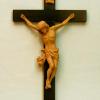
cappie Posted 1 hour ago Posted 1 hour ago In this week’s gospel, Jesus is teaching his disciples about their mission. He warns them of the persecutions and trials that they will face. Just as he, Jesus, faced opposition and rejection; so, will they. So too did the prophets, including Jeremiah, of whom we read in the first reading. Jesus seems to be thinking, to outline a little more clearly and a little more forcefully, just what it means to become his follower. The bottom-line message he tries to get across is that being his disciples is going to cost something—in fact, it’s going to cost a lot. He tries to offer some reassurance: “ Do not be afraid of those who kill the body but cannot kill the soul; fear him rather who can destroy both body and soul in hell. Can you not buy two sparrows for a penny? And yet not one falls to the ground without your Father knowing. Why, every hair on your head has been counted. So there is no need to be afraid; you are worth more than hundreds of sparrows..” There are bound to be disruptions, maybe even ruptures, in their lives and relationships—even the closest ones, like among family members—if they choose to keep following him. Essentially, he is saying, “Look, if you are going to follow me, you need to understand something: this is not a part-time thing, it is not a convenient thing, it is not an easy thing. It is going to cost you something. The most well-known modern-day work on the costs of discipleship is by Dietrich Bonhoeffer, the 20th-century German theologian and pastor who resisted the rise of the Nazis in his country, ultimately paying for those efforts with his life. He wrote a book called The Cost of Discipleship, in which he tries to define what is required of all who claim the name of Christian. Bonhoeffer is repulsed by Christians who make the Christian faith cheaper and easier, rather than embracing the true cost and personal sacrifice of following Jesus. And he famously writes in that book, in a moment of heartbreaking foreshadowing, “When Christ calls a man, he bids him come and die.” If you choose to follow Jesus, that commitment needs to reorient all your attachments to become your fundamental identity. Everything else answers to and builds on that. You don’t go ahead and sort out your life—what you like and what you care about and what you believe in—and then see how you might fit the Christian story into that. No, it needs to be the other way around: Your commitment to Jesus Christ—what he stood for and how he operated—needs to be primary. You build your life on that. If we really commit to following Jesus, then some things about us are going to need to change. Some parts of how we live, what we think, what we are attached to, are going to have to die. This is what it means to “take up our cross” and follow Jesus. This is what it means when Jesus says, “those who lose their life for my sake will find it.” In following Jesus, our lives, our souls, our selves become more full, expansive, and wondrous. This opening up of our souls not only connects us more deeply with the One, Holy, and Living God, it also brings us into deeper connection with the created order and our fellow human beings. And this naturally brings forth from us more good things in us—compassion, mercy, and love. When we choose to follow Jesus, it makes us more like Jesus, which in turn makes the world more like the one Jesus called us to create. Can we relinquish some of our self-serving control over our lives in order to bring about that expansiveness, that connectedness, that beauty? This is essentially the conclusion Bonhoeffer reaches at the end of The Cost of Discipleship. After laying out the costs and challenges of discipleship, he knows he must explain what would make such sacrifice and strain worth it. He writes this: If we surrender ourselves utterly to [Christ] we cannot help bearing his image ourselves…[we] become a reflection of him…That reflection of his glory will shine forth in us even in this life, even as we share his agony and bear his cross…Our life will then be a progress from knowledge to knowledge, from glory to glory, to an ever closer conformity to the image of the Son of God…[and through this] fellowship and communion with the incarnate Lord we [will] recover our true humanity, and retrieve our solidarity with the whole human race. That is what it happens when we follow Jesus.
Recommended Posts
Create an account or sign in to comment
You need to be a member in order to leave a comment
Create an account
Sign up for a new account in our community. It's easy!
Register a new accountSign in
Already have an account? Sign in here.
Sign In Now