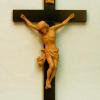
cappie Posted September 16, 2025 Posted September 16, 2025 For a number of holy men and women in history, the love of God made visible on Good Friday was more than just one element of their spiritual life; it became the source of a spirituality that permeated their progress in holiness. One of the most well-known of these was Francis of Assisi. The life of this joyful medieval mystic stands as a wonderful example of what can happen when someone ponders the Saviour’s sacrifice on Calvary. By his witness, Francis can help us enter into the very mystery of the cross. The Mystery of the Stigmata. Just two years before his death, Francis withdrew to La Verna—a rocky refuge in the mountains of central Italy—to spend time in prayer and solitude. One day, as he was kneeling beside the entrance to a cave, Francis saw suspended in the air before him a human figure with arms extended, as on a cross. The vision was suffused with a fiery light, while six long wings like those of angels surrounded and partly covered the figure’s lower body. As Francis gazed, entranced, he received in his own body the imprint of the lacerations in the hands, feet and chest of the hovering figure. From that moment on, the saint experienced a share in the suffering of Jesus—both in the exterior sign of the stigmata and in the interior experience of Jesus’ suffering out of love for fallen humanity. Even today, after many generations have reflected and written about it, devout Christians are still perplexed but intrigued by this event in the 13th century. Why did God intervene in such a dramatic fashion? Even though Francis tried to conceal the stigmata, word spread. Even those who witnessed the wounds were left wondering. In the documents read at his canonization and in other accounts of his life, contemporaries sought a partial explanation of what had happened at La Verna by pointing to three related elements in Francis’ life. The Centrality of the Cross. The first of these was the attraction the saint had always felt toward graphic representations of the crucified Christ—and even for simpler depictions of the cross—for they reminded him of the way in which Jesus had won our salvation. When Francis was in his early twenties, God called him to a special way of life, speaking to him audibly through an icon which is still watched over by the Poor Clares in Assisi: the San Damiano Cross. This enigmatic medieval painting shows Jesus as resurrected but still standing as if crucified, still bleeding from the jewel-like wounds of his passion. Francis did not miss the deeper message of this artistic medium: The price of unquenchable life is a love stronger than death. Always attentive to scripture, Francis noted that Ezekiel 9:4 speaks of the cross-like Hebrew letter Tau—U—marked on the foreheads of believers as a sign of divine rescue. The symbol occurs again in the book of Revelation 7:3. Not surprisingly, Francis adapted this sign as a kind of personal “logo.” He saw it in the design of the simple tunic he adopted as the habit he and his followers would wear. He made it a part of his signature on letters and traced it on the walls of the primitive dwellings where they gathered to rest and pray. Indeed, even the cruciform shape of non-religious objects would sometimes attract Francis’ attention because of the beauty always present in the eye of this loving beholder. Pondering the Gospels. Second, Francis not only kept the cross before his eyes externally, but he took the time to pray and to reflect deeply within himself on the gospel narratives of the paschal sacrifice of Jesus. Although much of this conversation remains hidden between the saint and his God, we do have clear indications of the way this focus on the Passion was never far from his mind. Three samples from prayers which he or his early followers preserved in writing can give us an illustration: Francis was often moved to tears by his deep compassion for what Jesus endured to rescue us from sin. Most especially, he was pained by the ingratitude and indifference of so many despite the price their sin exacted. He was known to cry out:: “Love is not loved! Love is not loved!” Francis was keenly aware of the physical sufferings involved in the passion and crucifixion, but his prayers reveal that his interest was directed even more to the spiritual and psychological agony of Jesus. He returned again and again to Jesus’ obedience and trust in the Father and to his incomparable affection for sinners. For Francis, this was the overpowering and unmistakable message of the cross. Francis’ first companions included some who were uneducated and could not read. Consequently, he taught them to memorize the following prayer, which reflected his own heart’s cry: “We adore you, O Christ, and we bless you, here and in all the churches of the world, because by your holy cross you have redeemed the world.” As part of his personal meditation, and something he shared with the cloistered sisters of Saint Clare, Francis composed an “Office of the Passion” modelled on the liturgy of the hours used in monasteries. Taken primarily from the psalms, it is essentially a set of scriptural passages which parallel the New Testament accounts of Jesus’ passion. Imitating the Lord. A third feature in Francis’ spirituality was the way in which he sought to imitate the details of Jesus’ earthly life. Like the Apostle Thomas—who was not going to be content with the testimony of others but had to touch and feel the proofs of the passion with his own hands—Francis wanted to experience Christ personally. This prompted him to imitate, and even to reenact, certain events recorded in the gospels. Thinking about Jesus as poor, hungry, and without a place to lay his head, fueled a desire in Francis to unite himself with the Lord by experiencing these things himself. Long before the event at La Verna, Francis sought to enter into the mystery of Jesus’ sacrifice by embracing sickness, pain, and hardship in the spirit of the love which crowned Jesus’ life by his death on Calvary. During his brief career as God’s troubadour on earth, many people turned to Francis of Assisi for spiritual assistance. Some joined his band of friars; many more simply looked to him for advice, wisdom, and direction. Looking over the elements of his deep devotion to Christ crucified, we can see that his approach was profound but simple. He kept the vision of the risen but crucified Lord before his eyes, he kept searching its meaning in his prayer; he kept looking for ways to embrace it in his daily life.. Francis insisted that he, like all of us, was a sinner, and that his moral failures were part of the reason why Jesus had to die. But instead of losing heart, or letting himself become paralyzed with remorse, Francis clung to the cross as a pledge of Jesus’ willingness to do everything and suffer anything to redeem us. The conviction that Jesus cared for him so deeply gave Francis the courage to face his own imperfections, knowing that Jesus would help him to deal with them. While the vast majority of Christians may never receive the blessing of the stigmata, we are all called, like Francis, to an inner conformity with Jesus, to hear the words of Philippians 2 addressed personally to our hearts: Have that mind in you which is the mind of Christ Jesus… He emptied himself, taking the form of a slave… He humbled himself, becoming obedient to death, even death on a cross…
Recommended Posts
Create an account or sign in to comment
You need to be a member in order to leave a comment
Create an account
Sign up for a new account in our community. It's easy!
Register a new accountSign in
Already have an account? Sign in here.
Sign In Now