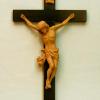
cappie Posted January 17 Posted January 17 When Jesus walked by and John announced to his followers, “Here is the Lamb of God who takes away the sin of the world! “, what were the people to make of such an improbable claim? If they had the slightest familiarity of their faith and religious tradition, two words stood out. They were “lamb” and “sins.” The edifice of first century Judaism was based on two traditions. The older, the one that placed the Temple centre stage, invoked memories of their father Abraham, as he attempted to offer his wife Sarah’s only son Isaac as a human sacrifice. In the story God’s messenger instructed Abraham to substitute an available animal, a goat, for his son. The story has many nuances, but its most important is the step it makes from barbarism to a more benign concept of substitution. God was going to accept an animal, albeit one in mint condition, as a blood offering by which the person, family, tribe or nation were “atoned,” made one with their Creator. Around this system grew the Tabernacle and then the Temple cult, supervised by a hereditary priesthood descended from Moses’ brother-in-law Aaron. The second vital part of Jewish religion in the days of Jesus was the synagogue system. The Old Testament tells the story of Israel, torn apart, situated between aggressive world powers, conquered again and again. The conquering powers sought to cower the Jewish people by destroying its visible connection with God. Those Jewish people taken hostage “by the waters of Babylon” not only wept; they gathered together to hear their Scriptures read by authorized teachers. In first century, Palestine Temple worship, with its substitutionary sacrifices, situated in Jerusalem, jostled together with synagogue practice, hearing and receiving the Scriptures and applying them to daily life. Note how today’s Gospel brings together these two practices, not in a theory, but in a Person. Jesus is the sacrificial lamb, “who died that we might be forgiven, who died to make us good.” Jesus is also Rabbi, the authorized teacher, in whom God’s law is renewed and applied to the new citizens in his chosen nation. If you are up to date with the never-ending church squabbles about how Jesus’ sacrifice on the Cross a substitute for our sins is, our family sins, the Church’s sins and that “of the whole” world, the important point is that God knows how this is true. Our minds are best focused on the Eucharist, rather than on theories of how Atonement works, on a Person rather than a theory. In the Mass, we re-member. We bring to life in the here and now, the sacrifice, once offered for the sins of the whole world. We eat and drink, ingest, the life of Jesus, the Lamb of God. Before we reach that point in the service, we hear Jesus the Rabbi, the authorized teacher, expounding to us God’s law, the words Jews heard at the time of Jesus and the words Christians have heard since the time of Jesus. And we corporately confess our misdeeds, missteps and flirtations with evil. We do so as God’s community of priests, as we stand between God and the human race, the nations, the Church, our families and ourselves. We live in an extraordinarily divided world. We see this in church, society, relationships, interactions among nations and in our dealings with creation. Too often we approach political or theological differences as if we were playing football: We celebrate the strongest, labelling the others as stupid or losers. Doing that, we belittle ourselves as much as those whom we scorn. Expressing contempt for God's creatures is blasphemy; it disparages what God has made and loves. If we are, as Paul said, sanctified in Christ, our communal mission is to continue the work of taking away the sin of the world. Like John, we need not call attention to ourselves but allow the world to see that the Lord is our strength. In Christ, the Lamb of God, we are called and therefore capable of bringing God's light to our world. Today, we are the ones Isaiah proclaims, formed from the womb to gather the people together and restore victims and the lost so that salvation may reach the ends of Earth. Are we ready to say, "Here we are, Lord, we come to do your will?"
Recommended Posts
Create an account or sign in to comment
You need to be a member in order to leave a comment
Create an account
Sign up for a new account in our community. It's easy!
Register a new accountSign in
Already have an account? Sign in here.
Sign In Now