CatholicCid Posted April 13, 2007 Posted April 13, 2007 [quote name='Raphael' post='1241705' date='Apr 13 2007, 01:58 PM']I don't think it will. [/quote] Then I suppose that means Budge accepts it as true
Knight of the Holy Rosary Posted April 13, 2007 Posted April 13, 2007 I find it amusing that Budge condemns the authority of the Bishops and yet claims this same authority for herself. The Magesterium doesn't bare the authority to interpret Scripture; I do. The Pope isn't infallibly guided by the Holy Spirit; I am. What's the difference between Budge and the Pope/Magesterium? [quote]And how shall they preach [b]unless they be sent[/b], as it is written: How beautiful are the feet of them that preach the gospel of peace, of them that bring glad tidings of good things! (Romans 10:15)[/quote] She wasn't sent.
Starets Posted April 13, 2007 Posted April 13, 2007 [quote name='Budge' post='1241732' date='Apr 13 2007, 04:35 PM']Yeah, the Bible warns of it. [b]2Cr 11:13 For such [are] false apostles, deceitful workers, transforming themselves into the apostles of Christ. [/b] What other worldwide church [its not the Mormons] have transformed themselves into the apostles of Christ?[/quote] Apples and Oranges, Budge. For the third time today. The Bible does no such thing. On the contrary it shows Apostolic Succession in practice in the Early Church. See, for example Acts 1:15-26: 15In those days Peter stood up among the believers[a] (a group numbering about a hundred and twenty) 16and said, "Brothers, the Scripture had to be fulfilled which the Holy Spirit spoke long ago through the mouth of David concerning Judas, who served as guide for those who arrested Jesus— 17he was one of our number and shared in this ministry." 18(With the reward he got for his wickedness, Judas bought a field; there he fell headlong, his body burst open and all his intestines spilled out. 19Everyone in Jerusalem heard about this, so they called that field in their language Akeldama, that is, Field of Blood.) 20"For," said Peter, "it is written in the book of Psalms, " 'May his place be deserted; let there be no one to dwell in it,'[b] and, " 'May another take his place of leadership.'[c] 21Therefore it is necessary to choose one of the men who have been with us the whole time the Lord Jesus went in and out among us, 22beginning from John's baptism to the time when Jesus was taken up from us. For one of these must become a witness with us of his resurrection." 23So they proposed two men: Joseph called Barsabbas (also known as Justus) and Matthias. 24Then they prayed, "Lord, you know everyone's heart. Show us which of these two you have chosen 25to take over this apostolic ministry, which Judas left to go where he belongs." 26Then they cast lots, and the lot fell to Matthias; so he was added to the eleven apostles. Here you have St. Peter leading a group of 120 believers, and giving some scriptural warrant for replacing Judas. Not only that, the community prays for divine guidance in choosing a successor. Not only that a successor was chosen. And that is not the only scriptural passage that bears witness to the biblical doctrine of apostolic succession. It simply is the one that shows it in practice. Other passages that allude to apostolic succession or apostolic authority include the following: 1 Thessalonians 2:6-7. Here we find two other man being called "Apostles", Timothy and Sylvanus, who were ordained as Bishops and were considered to have apostolic authority. And that's not all. Here are more verses that allude to the practice: Acts 14:23; 20:28. 1 Corinthians 12: 27-29 Ephesians 4:11; 2:20 1 Thessalonians 1:1-2:12 1 Timothy 3:1-8; 4:13-14; 5:17-22 2 Timothy 2: 1-2 This pattern of passing down the office and teaching authority was followed in the post-Apostolic age as well. the following webpages provide further evidence for that. Not only that, they provide historical evidence that "apostolic succession" was one of the ways the early church used to determine who "was sent" and who "was not sent". [url="http://home.inreach.com/bstanley/apostol.htm"]Apostolic Succession[/url] [url="http://www.catholic.com/library/apostolic_succession.asp"]Apostolic Succession[/url]
Winchester Posted April 14, 2007 Posted April 14, 2007 [quote name='Budge' post='1241340' date='Apr 13 2007, 09:26 AM']Hey I was talking about the Magisterium here too, a council is part of the Magisterium is it not? All men claiming power for THEMSELVES, with no accountability, measuring themselves by themselves.[/quote] You didn't quote the passage about them having no accountability. This is hurting your presentation.
carrdero Posted April 14, 2007 Posted April 14, 2007 [quote name='Budge' post='1241732' date='Apr 13 2007, 03:35 PM']Yeah, the Bible warns of it. [b]2Cr 11:13 For such [are] false apostles, deceitful workers, transforming themselves into the apostles of Christ. [/b] What other worldwide church [its not the Mormons] have transformed themselves into the apostles of Christ?[/quote] Actually their presidents, apostles and elders claim that they are infallible too. It's all very confusing.
Winchester Posted April 14, 2007 Posted April 14, 2007 If God cannot protect men from teaching error, then the Bible cannot be completely free of theological error, for it was written by men. By extension, one could not claim the ability to interpret the now admittedly flawed Bible correctly because man, being incapable of infallibility regardless of God's grace, would at some point err or at least be subject to error. If one says the Holy Spirit extends protection against this, then one admits to God's grace being able to protect one from error and thus admits to the possibility of infallibility. If the Bible is free of error, then God can indeed protect men from teaching theological error and therefore, one must disprove in particular the Catholic explanation of infallibility. One cannot hold to the perfection of the Bible and at the same time ridicule the very notion of infallibility.
Thy Geekdom Come Posted April 14, 2007 Posted April 14, 2007 [quote name='Budge' post='1241340' date='Apr 13 2007, 08:26 AM']Hey I was talking about the Magisterium here too, a council is part of the Magisterium is it not? All men claiming power for THEMSELVES, with no accountability, measuring themselves by themselves.[/quote] Okay, so councils are evil, and they impose on the faithful? Would you have said that to St. James if you were a Judaizer in the Church at Jerusalem in the first century? They held a council and determined that the Judaizers were wrong. What would you say to that council?
Budge Posted April 14, 2007 Author Posted April 14, 2007 That meeting was biblical, Romes councils are not. speaking of Judasizers that apostles were trying to head off errors that are now in your church.
Thy Geekdom Come Posted April 14, 2007 Posted April 14, 2007 [quote name='Budge' post='1243108' date='Apr 14 2007, 04:08 PM']That meeting was biblical, Romes councils are not. speaking of Judasizers that apostles were trying to head off errors that are now in your church.[/quote] Just because we don't put them in the Bible doesn't mean they aren't valid, Budge. The point is that the Scriptures indicate that the bishops have the power to come together and hold councils. As for the Judaizers' errors, which of them do we hold to?
Budge Posted April 14, 2007 Author Posted April 14, 2007 Judaizers are those who wanted to impose physical rituals of the Law on Christians or set up a particularly Jewish version of Christianity. I believe Catholics is very Judasized. Judaizers demanded circumcision for salvation--galations 5:2, the same way that Catholics now demand sacraments for salvation. A poster posted this on my board: [quote] the understanding that "fall from grace" was intrinsically wrapped around the re-Judaism of the "free grace" gospel and was being introduced by the Judaizers. In actuality they WON, and although Paul marveled at how FAST they fell back into mans efforts to be worthy, over time, they grew into the Greek Orthodox church and that in turn, became the Roman Catholic church. MOST of the "Christians" in the world today, are those who Paul was condemning of in Galatians. [b]More than 60% of the believers today are in works based systems that THINK they are honoring Paul and his gospel, but in truth, are nothing more than modern, reconstructed Judaizers incarnate[/b].[/quote] I suggest you read the book of Galatians to understand this. IN fact the book of Galatians whjich I read while still in the Catholic Church is another thing that woke me up!
cathoholic_anonymous Posted April 14, 2007 Posted April 14, 2007 (edited) The prominent Jewish convert to Catholicism, Rosalind Moss, describes Catholic churches as 'synagogues with Christ'. She is right. Jesus said, "I came not to abolish the law, but to fulfil it," and in the beauty of the Catholic liturgy you can see that fulfilment. A lot of fundamentalist Christians cling to the mistaken notion that it is somehow dangerous and wrong to adhere to a pattern in worship, which is blatantly false. Even fundamentalist and Evangelical churches adhere to a prescribed liturgy of sorts. I know this because I have prayed with friends in their non-denominational and Evangelical places of worship. One girl once asked me pityingly if I felt 'trapped' by the set prayers of Catholic prayer books - apparently not realising that the so-called 'spontaneous prayer' that is used at her service is much more repetitive than anything used at the Mass. "We really want to, uh, just come before you, Lord, and we really, err, trust you, yes, Lord Jesus, we want your Spirit, we're here to praise your holy name, we come before you Lord, and we, err, lift everything up..." This prayer is repeated time and time again, to the accompaniment of many arms being raised into the air in unison. I don't want to disparage people's dialogue with God. I do believe that the prayer of my evangelical friends has real meaning and sincerity. What I [i]do[/i] want to point out is that all Christians create rituals and formulaic prayers for themselves, often without realising it. This is because human beings respond well to the rhythm of liturgy. It is a very good, strong framework for prayer - which makes a lot of sense, when you consider the way our brains work. The problem I have with many evangelical Protestant services is the mistaken impression that you must always be doing something new for God, putting on a show for Him, proving that you are playing the game properly. It's not enough to quietly recite the Glory Be over and over again, complete with the customary bows, as you ponder the blissful depths of the Trinity. You have to stage a concert for God, otherwise you may get accused of not praying 'in the Spirit'. The focus is too often on the act of praying rather than on prayer itself. If you are wrapped up in pure prayer, you won't notice what the person in the pew in front of you is doing. [quote]I believe Catholics is very Judasized. Judaizers demanded circumcision for salvation--galations 5:2, the same way that Catholics now demand sacraments for salvation.[/quote] Sacrament literally means 'sign of grace'. They are not tokens that you collect to buy a place in Heaven. They are beautiful gifts that enrich our lives, the grace and peace of Jesus Christ manifested amongst us in a tangible way. Catholics do not 'demand' sacraments for salvation in the same way that you might demand proof of purchase at a shop. We are just grateful to receive presents from Heaven. Edited April 14, 2007 by Cathoholic Anonymous
Thy Geekdom Come Posted April 14, 2007 Posted April 14, 2007 [quote name='Budge' post='1243143' date='Apr 14 2007, 04:46 PM']Judaizers are those who wanted to impose physical rituals of the Law on Christians or set up a particularly Jewish version of Christianity. I believe Catholics is very Judasized. Judaizers demanded circumcision for salvation--galations 5:2, the same way that Catholics now demand sacraments for salvation. A poster posted this on my board: I suggest you read the book of Galatians to understand this. IN fact the book of Galatians whjich I read while still in the Catholic Church is another thing that woke me up![/quote] I've read the Book of Galatians, Budge. I only see Catholicism in it. We don't believe in works-based salvation. I'm writing my thesis write now and just finished the part on Catholic justification theology. Oh, and the Bible demands sacraments for salvation (Acts 2:38).
Budge Posted April 15, 2007 Author Posted April 15, 2007 [quote]he prominent Jewish convert to Catholicism, Rosalind Moss, describes Catholic churches as 'synagogues with Christ'.[/quote]This is not a good thing, because there aer Christians who warn and are right that the Catholic Church is the contiuation of the Judaism temple system, when jesus was supposed to be the ultimate fulfilment meaning no rituals, rites and other sacrifices. There are also warnings in scripture about the "synagogue of Satan" and those who 'say they are Jews but are not" So be careful there CA, you are actually making things worse. There is a difference in pattern in worship, Ie, I pray every night, as opposed to rituals that are taught as being "necessary for salvation"--thts right from the Catholic CC, or as "channels" of God's grace. [quote] Catholics do not 'demand' sacraments for salvation in the same way that you might demand proof of purchase at a shop[/quote]. [b]The Church affirms that for believers the sacraments of the New Covenant are necessary for salvation. "[/b]
cmotherofpirl Posted April 15, 2007 Posted April 15, 2007 Yep, Baptism is necessary for salvation. If you commit sin after baptism you are bound to confess them. Jesus himself gave the Come to take and eat, and do THIS in remembrance of me. Pretty much orders from the Boss Himself
cathoholic_anonymous Posted April 15, 2007 Posted April 15, 2007 [quote]This is not a good thing, because there aer Christians who warn and are right that the Catholic Church is the contiuation of the Judaism temple system, when jesus was supposed to be the ultimate fulfilment meaning no rituals, rites and other sacrifices.[/quote]You have just taken Ms Moss's description out of context and discarded the rest of my paragraph for your own purposes. Read the rest of it, and write a reply to that - if you can. As for 'no rituals'...Jesus commanded us to celebrate the Eucharist 'in remembrance of Me'. Like it or not, that is a ritual, in the same way that raising your arms in the air at a non-denom service to the accompaniment of the same repeated supplications is a ritual. I know which one I would rather celebrate. [quote]There are also warnings in scripture about the "synagogue of Satan" and those who 'say they are Jews but are not"[/quote] Catholics do not claim to be Jewish. Instead, we believe that Catholicism is Judaism fulfilled. The evangelical Protestant view of Judaism seems to be of a religion that has outlived its usefulness and can now be razed to the ground while we all go off and reinvent the wheel. The Catholic view of Judaism is of a bare tree that came to fruition in Christ. The reference to 'the synagogue of Satan' comes in Revelation and refers specifically to hypocrites in the church at Smyrna, who claimed to be Jews but weren't. This is extremely obvious if you read the passage in question. Was that why you didn't cite chapter and verse references? You have taken Scripture out of context in the same way that you dislocated one of my sentences from its setting. [quote]So be careful there CA, you are actually making things worse.[/quote]Only if my readers insist on seeing what they want to see and ignoring the rest. [quote]There is a difference in pattern in worship, Ie, I pray every night, as opposed to rituals that are taught as being "necessary for salvation"--thts right from the Catholic CC, or as "channels" of God's grace.[/quote] I repeat again: "Catholics do not 'demand' sacraments for salvation in the same way that you might demand proof of purchase at a shop." God sends us gifts in the form of His sacraments and we accept them joyfully. You see them in very legalistic terms - a betrayal of your contractarian view of salvation. We see them as part of a covenant rather than as clauses in a contract. A covenant is a loving exchange of persons, such as we see in marriage; a contract is a business deal in which you do specific things to earn a specific result. The Eucharist, Reconciliation, anointing, marriage, holy orders, baptism, even Last Rites - they are all an exchange of persons rather than an exchange of a particular currency. And this is why they are life-giving. This is the way God has chosen to come to us. It is not your place to criticise His ways of giving.
kenrockthefirst Posted April 16, 2007 Posted April 16, 2007 [quote name='kenrockthefirst' post='1241810' date='Apr 13 2007, 03:05 PM']"False apostles," of course, implies the opposite, i.e. true apostles. And BTW, the text you cite was written by St. Paul, [i]who wasn't even one of the original twelve.[/i] Shall we consider him a "false apostle?" Please, answer the question: without authoritative preaching and teaching, what makes Budgianity any "truer" than the Branch Davidians?[/quote] Please, answer the question, Budge: what makes Budgianity any "truer" than the Branch Davidians? What makes your Magisterium "truer" than the Catholic Magisterium?
homeschoolmom Posted April 16, 2007 Posted April 16, 2007 [quote name='kenrockthefirst' post='1241489' date='Apr 13 2007, 12:41 PM']Every man / woman for him / her self then? How can there even [i]be[/i] a Church if there is no one with preaching and teaching authority subsequent to the "original" Apostles? Your view reminds me of the US Army advertising campaign, an "Army of One." In your case, it's a "Church of One." Without an authoritative preaching and teaching authority, it's anyone's best guess, and your opinion is as good as mine or David Koresh's.[/quote] Maybe this is what Budge believes Jesus means when He prays: "I pray also for those who will believe in me through their message, that all of them may be one, Father"
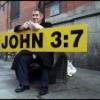
Thy Geekdom Come Posted April 16, 2007 Posted April 16, 2007 [quote name='Budge' post='1244240' date='Apr 15 2007, 10:14 AM'][b]The Church affirms that for believers the sacraments of the New Covenant are necessary for salvation. "[/b][/quote] "Jesus answered, Verily, verily, I say unto thee, Except a man be born of water and of the Spirit, he cannot enter into the kingdom of God." -John 3:5, KJV Notice Jesus says that not only the Spirit, but also water, are necessary.
cathoholic_anonymous Posted April 16, 2007 Posted April 16, 2007 The Eucharist, too. "Jesus said to them, 'I tell you the truth, unless you eat the flesh of the Son of Man and drink his blood, you have no life in you. Whoever eats my flesh and drinks my blood has eternal life, and I will raise him up at the last day. For my flesh is real food and my blood is real drink. Whoever eats my flesh and drinks my blood remains in me, and I in him. Just as the living Father sent me and I live because of the Father, so the one who feeds on me will live because of me." John 6:53-57.
Akalyte Posted April 16, 2007 Posted April 16, 2007 (edited) The Seven Sacraments are Biblical and are needed: 1. Baptism = is the initiation of a person into Christianity * Forgiveness of sins & reception of the Holy Spirit (Ezekiel 36:25-27 ("All scripture…": 2 Tim 3:16), Acts 2:38, Acts 22:16) * Baptized into one body (1 Corinthians 12:13, Galatians 3:27, Colossians 2:11-12) * Baptism necessary for salvation (1 Peter 3:20-21, John 3:5 (also note verse 22) * Instituted by Christ (Matthew 28:19) 2. Reconciliation (also known as Confession) = The means by which God forgives sins after baptism * Confess your sins to men (Leviticus 5:5-6 ("All scripture…": 2 Tim 3:16), (Law is a shadow: Hebrews 10:1), 1 John 1:9, James 5:16) * Can men forgive sins? Only God has the power to forgive sins but He exercises this power through men. (Mark 2:7, Matthew 9:1-8) * Instituted by Christ (John 20:21-23) 3. Eucharist = Communion is an intimate encounter with Christ, in which we sacramentally receive Christ into our bodies * A perfect offering shall be made (Malachi 1:11 ("All scripture…": 2 Tim 3:16) * Flesh & Blood (John 6, Matthew 26:26-28, Mark 14:22-24,Luke 22:19-20, 1 Cor 11:23-26, 27-29) * Many disciples leave (John 6:66, Usually Jesus explains parables to avoid confusion as in: Matthew 13; 15:15; 17:10-19; & chapter 19) * Instituted by Christ (Luke 22:19) 4. Confirmation = is a sacrament of initiation into the Christian life by confirming your faith * Laying of the hands (Acts 8:14–17, 9:17, 19:6) * Christianity's basic teachings (Hebrews 6:2) * Instituted by Christ (John 3:5) 5. Matrimony = is the union between a man and a woman as a whole with God's blessings * As a constitution between a man and a woman (Luke 16:18; cf. Mark 10:11–12, Rom 7:2-3) * Instituted by Christ (1 Cor. 7:10-11) 6. Holy Orders = is the sacrament by which a person decides to dedicate their entire lifes to serve the Lord * Bishops (1 Tim. 5:19–22; 2 Tim. 4:5; Titus 1:5) * Priests (1 Tim. 5:17; Jas. 5:14–15) * Deacons (Acts 6:1–6) * Instituted by Christ (2 Tim. 2:2) 7. Anointing of the Sick = is administered to bring spiritual and even physical strength during an illness, especially near the time of death * Strength from the Holy Spirit (Matt. 8:17) * Healing powers (Mark 6:13) * Forgiveness of sin (Jas. 5:14–15) * Instituted by Christ (Mark 6:13; Jas. 5:14-15) Edited April 16, 2007 by Akalyte
Recommended Posts
Create an account or sign in to comment
You need to be a member in order to leave a comment
Create an account
Sign up for a new account in our community. It's easy!
Register a new accountSign in
Already have an account? Sign in here.
Sign In Now