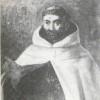
graciandelamadrededios Posted June 3, 2013 Posted June 3, 2013 THE RULE OF ST. CLARE AND THE CONSTITUTIONS FOR POOR CLARE NUNS OF THE REFORM OF ST. COLETTE 1932 CHAPTER II. Of the Quality of the Habit and of the other Garments 20. - Since the Rule of Form of life lays down that the Sisters be clothed with poor garments, we ordain and decree that this poverty, both with respect to price and colour, be attended to. 21. - Although it is laid down in the Form of life that the Abbess shall supply and provide the person who enters, on her laying aside her secular dress, with three tunics and a mantle, nevertheless, if necessity or infirmity, or any circumstances of person or of place or time should cause any one to need more garments, we declare that the Abbess shall provide the Sisters with garments according to the qualities according to the qualities of persons and places and times and cold climates, as necessity may seem to require. 22. - It is to be understood that the three tunics mentioned in the Form of life need not be of the same form or shape, since the two inner tunics are allowed, not so much as being part of the Habit of the Order as for the comfort and heat and decency of the body; nor need they be of the same colour. 23. - Wherefore, we direct and ordain that the outer tunic be designated as the Habit of the Order, without which the Sisters may not appear in public, nor retire to sleep, unless illness or infirmity or any other manifest necessity, which has been declared to be sufficient either by the Abbess or her Vicaress, should warrant them to act otherwise. 24. - Let the length of the habit be such that, when worn, it shall not exceed the stature of the person who wears it and train along the ground; and the width shall not exceed fourteen palms. The sleeves shall not extend beyond the first finger joints. 25. - The inner tunics shall be of poor cloth, and may not be lined with skins or furs. 26. - The mantle also shall always be of poor and course cloth, and shall not be gathered or pleated about the neck; nor so long as to train in anyway along the ground. 27. - Let plainness, austerity and poverty, both with respect to texture, cost and colour, be always apparent in all the garments of the Sisters. 28. - Let all the Sisters, both the Abbesses and other Officials, be clad with the same common cloth, and let all partiality be excluded. 29. - The cord, with which the Sisters are girt, shall be plain and common, and shall be free from all manner of singularity. 30. - For the rest, with regard to the covering of the head, we prescribe and ordain that all the Sisters, both the Abbesses as well as the other professed members, without any distinction whatever, shall in all humility, modesty and piety, cover their heads and avoid singularity and vanity of all kinds. 31. - That this be the better observed at all times and by all Sisters in their Convents in every place, we decree that all the Sisters shall so adjust their kerchiefs, that the forehead, both cheeks and the chin shall be for the greater part covered, so that their faces may be in no wise entirely seen. 32. - Besides, the veils and all the kerchiefs that are worn on the head and about the neck shall be so arranged that they cover all the head, the greater part of the chest and the corresponding part of the body at the back. 33. - Furthermore, we direct that all veils and kerchiefs be of common, course and plain linen, so that the holy poverty and austerity of their profession may ever shine forth in them. 34. - Moreover, in order that cleanliness be always attended to, we declare that each Sister, with the consent and permission of her Abbess, may have two black veils and two or three changes of white kerchiefs. 35. - Let all the Sisters beware lest they have pleated kerchiefs, or kerchiefs of silk or of any other costly material. 36. - Finally, no novice may wear the black veil before she has made her profession, but she shall wear the white kerchiefs, suitably arranged according to the direction of the Abbess, as has been heretofore the custom. Photos of Poor Clare Colettine Nuns before Vatican II http://nunsandsisters.files.wordpress.com/2011/01/n25.jpg http://25.media.tumblr.com/tumblr_lxew5yfA0r1r11k11o1_500.jpg http://home.scarlet.be/~hv023068/Triumviraat/Karel/Gudula_I/Gudula11aw.jpg http://users.telenet.be/heemkundekringrosmeer/images/geestelijkenRosmeer/zusterMariaJulianaStevens.jpg The Poor Clare Colettines of Hawarden, Wales made adaptation to the Habit after Vatican II: The Ty Mam Duw Poor Clare Colettine had changed the way they wore their kerchief after Vatican II. They now have a simple coif covering the hair but not the side of the face. Their neck if partially covered with a white kerchief which also covers the shoulder or shall I say draped the shoulders. Since Vatican II stipulates to take into consideration the customs of the country where the monastery is situated; this is their interpretation of the kerchief – the national custome of women in Wales. If you type in google “national custome of women in wales†you will see that women draped kerchiefs on their customes. The photo posted on the forum clearly shows the nuns neck is only partially covered while during Vatican II, the neck and the side of the face were completely covered if you based it from the Pre-Vatican II photos of Ty Mam Duw Poor Clares in their website. Traditional Welsh Custome for Women:
OnlySunshine Posted June 3, 2013 Posted June 3, 2013 It's interesting to see the way the habit has evolved since the time of St. Clare. I love the current habit. I like that it doesn't cover the chin (that would be irritating to me) anymore. I also like that the bib collar is not as long. :)
nikita92 Posted June 3, 2013 Posted June 3, 2013 My absolute favorite as far as design goes, is Mother Angelica's Poor Clares!! The square headgear..around the face! I agree.. NO chin covering though.
Eowyn Posted June 3, 2013 Posted June 3, 2013 The old habit looks mighty uncomfortable :huh: A lot of them look that way. Can you imagine driving with this headgear?
Kateri89 Posted June 3, 2013 Posted June 3, 2013 A lot of them look that way. Can you imagine driving with this headgear? Haha imagine trying to switch lanes lol...what was the purpose of those 'veils' anyway?
salveregina10 Posted June 3, 2013 Posted June 3, 2013 Aren't these awesome habits :) Missionary Benedictine Sisters - http://www.norfolk-osb.org/
Chiquitunga Posted June 4, 2013 Posted June 4, 2013 Haha imagine trying to switch lanes lol...what was the purpose of those 'veils' anyway? for flying of course! :cupid: so they didn't need to drive! :smile3:
graciandelamadrededios Posted June 4, 2013 Author Posted June 4, 2013 Haha imagine trying to switch lanes lol...what was the purpose of those 'veils' anyway? The Daughters of Charity of Saint Vincent de Paul were wearing cornette - the sisters adopted them from peasant women in France few years after the company was founded. It protects them from the sun.
AnneLine Posted June 4, 2013 Posted June 4, 2013 (edited) I loved you comments about the Daughters of Charity Cornette: A lot of them look that way. Can you imagine driving with this headgear? Haha imagine trying to switch lanes lol...what was the purpose of those 'veils' anyway? I went to high school with the Daughters just after they changed from the cornette to their intial modified habit (below). Any one of those sisters would have given you 'the look' if you had referred to her cornette as a veil! Because.... they were founded by St. Vincent De Paul, and they were specifically founded WITHOUT a veil. Because.... he had seen what had happened to the Visitation Nuns who were founded by Sts. Francis de Sales and Jane Frances de Chantal a few years before that. St. Francis had wanted them to be able to go out and do a limited ministry of visiting the sick and poor (hence the 'Visitation' nuns)... but when they submitted the rules to Rome, Rome quickly replied they were nuns -- veils and vows made nuns, and nuns had to be cloistered. So....NO outside ministry! (That's also why there are two 'ways' of being Visitation Nuns -- First and Second Federation - Strictly enclosed, the First Federation, and those with an external ministry ala what was originally planned by St. Francis, the Second Federation). When St. Vincent heard what happened to St. Francis' nuns, he is reported to have said, "Well, if veils and vows make nuns, and nuns have to be cloistered, our 'Servants of the Poor' will NOT wear veils, and they will NOT take permanent vows. So they will NOT have to be cloistered!" The Daughters of Charity of St. Vincent to this day do NOT take permanent vows... they take vows that are renewed each year on March 25. And they adopted the clothing worn by the poor girls who had come from the countryside - blue dresses, white collars, and the Cornette, the distinctive garb of the peasants near Paris. Very much theye way Mother Teresa's sisters adopted their sari as their habit. However, as the Daughters would have told you, the cornettes just weren't practical in modern life. They were difficult to keep clean, wilted in fog, heat, rain, etc. And they were impossible to drive in (which wasn't a problem until mid-century, because they weren't allowed to drive.). So... when the Vatican asked women religious IN THE LATE 1950s to adapt their habits to modern conditions, they did exactly what they were asked. They were gifted by the designer Dior (who had always respected them!) with a well-designed habit. This is what it looked like originally: The sisters were very clear that it was NOT a veil - it was 'headgear' or a 'hat' because of the request of their founder. Unfortuantely the headpeace was made of metal, and a lot of the sisters developed ear problems because of the pressure on their ears.... so it was modified to this: and later just to a simple button down dress with the veil. simple headgear. for flying of course! :cupid: so they didn't need to drive! :smile3: he he he You are, of course, thinking of The Flying Nun.... and of the wonderful book The 15th Pelican! It was the very sweet book that the concept of The Flying Nun came from... and was a better story. I'd recommend that to ANYONE! Edited June 4, 2013 by AnneLine
Chiquitunga Posted June 4, 2013 Posted June 4, 2013 This is Blessed Marie Celine of the Presentation, PCC - http://forums.catholic.com/attachment.php?attachmentid=5181&d=1234343580 She was a PCC but her habit is different from other pre-VII PCC habits posted here. Her chin is not covered for one thing. These are not actual photos of her, but I think it can be assumed this was how their habit looked. I think the only photo of her is the one before she entered here, http://lafranclaire.free.fr/Photos.html picture of the community from that site from the book .. https://tanbooks.benedictpress.com/index.php/Blessed-Marie-Celine-of-Presentation "The Monastery of the Ave Maria [beautiful name!!] of Talence was brand new when Germain entered. The Poor Clare Colettines from Grenoble had moved in during 1893, and the arrangement of the convent was still in process." Anyway, so it seems there were some variations among the PCCs. I like her habit :like: They also have a scapular like the PCPAs. Separate question, is this by chance considered a Brown Scapular of Our Lady of Mt. Carmel by the PCPAs or other Poor Clares that where them? These PCs (not sure if they're Colettine or not) from the video Desire posted in the wedding dress thread also have them. Love this :heart: http://youtu.be/IEMLcs43Bz4
truthfinder Posted June 4, 2013 Posted June 4, 2013 This is Blessed Marie Celine of the Presentation, PCC - http://forums.catholic.com/attachment.php?attachmentid=5181&d=1234343580 She was a PCC but her habit is different from other pre-VII PCC habits posted here. Her chin is not covered for one thing. These are not actual photos of her, but I think it can be assumed this was how their habit looked. I think the only photo of her is the one before she entered here, http://lafranclaire.free.fr/Photos.html picture of the community from that site from the book .. https://tanbooks.benedictpress.com/index.php/Blessed-Marie-Celine-of-Presentation Anyway, so it seems there were some variations among the PCCs. I like her habit :like: They also have a scapular like the PCPAs. Separate question, is this by chance considered a Brown Scapular of Our Lady of Mt. Carmel by the PCPAs or other Poor Clares that where them? These PCs (not sure if they're Colettine or not) from the video Desire posted in the wedding dress thread also have them. Love this :heart: http://youtu.be/IEMLcs43Bz4 Are you sure she was PCC and not OSC? The website refers to her as a Clarisse - which the francophones I know who use the term to mean OSC and would explain why there was no kerchief.
Antigonos Posted June 4, 2013 Posted June 4, 2013 A lot of them look that way. Can you imagine driving with this headgear? They couldn't. Of course, the habit antedates cars.
Chiquitunga Posted June 4, 2013 Posted June 4, 2013 Are you sure she was PCC and not OSC? The website refers to her as a Clarisse - which the francophones I know who use the term to mean OSC and would explain why there was no kerchief. That's what I wondered, but then it says specifically in the book I quoted above that they were Poor Clare Colettines.
AnneLine Posted June 4, 2013 Posted June 4, 2013 Just Because it is relevant to the discussion..... last December I asked Sr. Emma (in her thread) about this before she went into the PCCs... and she gave us a pretty good answer. Here was my original question: =============================================== Posted 18 December 2012 - 08:14 PM Emma, I'm curious.... Obviously the PCCs wear the traditional habit -- but even those are sometimes modified a bit. I've seen old pictures of what I believe were PCCs with a different style of white headgear. Some photos show almost a strip OVER the chin (almost like aforehead cover, but on the chin area--was this modified after Vatican II? It appears also on this holy card for St. Collette... and then some of them seem to have much more white material over the shoulders, almost like a capelet of some sort. The pictures you posted recently (here is one) of some of the historical photos seem to show the bigger coif/guimpe. I'm just curious.... And it looks a lot more like what the Welsh Poor Clare Colettines currently wear... and would explain why their habit looks different... Do you know what the story is? =============================================== and this is what she responded: =============================================== Hi AnneLine! Hmm I cannot comment on the larger cappa(esque) white piece, except that each Monastery is autonomous, and this extends to habits, so each community interprets what the habit of their Monastery is to look like-assuming there is a habit, of course! So maybe there is some debate over whether St Clare's habit had the capelet.. Or it could be that it was the French habit "trend" and was brought forth by St Colette, Found this to explain the chin covering: THE RULE OF ST. CLARE AND THE CONSTITUTIONS FOR POOR CLARE NUNS OF THE REFORM OF ST. COLETTE CHAPTER II Of the Quality of the Habit and of the other Garments. That this be the better observed at all times and by all the Sisters in their Convents in every place, we decree that all the Sisters shall so adjust their kerchiefs, that the forehead, both cheeks and the chin shall be for the greater part covered, so that their faces may be in no wise entirely seen. Yes, I believe it was done away with in Vatican II.. Just for fun, here is a picture of Mother Francis with the chin covering: =============================================== One of you noted earlier in this thread that the Welsh PCCs have adapted their guimpe to look more like the clothing of the traditional welsh poor... which makes COMPLETE sense, given that they are the POOR ladies! I don't know about Celine of the Trinity... it sure looks like a regular OSC habit to me... could be that they were one of the stricter groups of OSCs?
Chiquitunga Posted June 4, 2013 Posted June 4, 2013 I don't know about Celine of the Trinity... it sure looks like a regular OSC habit to me... could be that they were one of the stricter groups of OSCs? I was just going back to that discussion from Emma's thread! Regarding Blessed Marie Celine, it says in the book the Rockford PCCs published on her that she was Colettine - https://tanbooks.benedictpress.com/index.php/Blessed-Marie-Celine-of-Presentation "The Monastery of the Ave Maria of Talence was brand new when Germain entered. The Poor Clare Colettines from Grenoble had moved in during 1893, and the arrangement of the convent was still in process." Wonderful post on the Daughters of Charity, by the way! Thank you!! Great to learn all of those things! Are they still adament about not calling their modified veils now "veils" but headgear too? or just the old Cornette? Thanks again for taking the time to share with us what you know about them. :)
Chiquitunga Posted June 4, 2013 Posted June 4, 2013 Another quote from the book... "The present book in its English translation is a compilation of several French publications about the life of Sister Marie Celine of the Presentation, P.C.C., sent to us by our Poor Clare Sisters in Pessac, France, who were the privileged custodians of her mortal remains ... This young Colettine Poor Clare, though little known, is one of the giants of the "little way" and has often been compared to her contemporary, St. Therese of Lisieux." Of course the Rockford PCCs could be trying to claim her as their own :cool: but I would guess they have the correct information. They didn't claim Sr. Mary of the Holy Trinity (Poor Clare of Jerusalem) was PCC. Love her so much!! btw - http://www.amazon.com/gp/product/089555318X/ref=pd_lpo_k2_dp_sr_1?pf_rd_p=1535523722&pf_rd_s=lpo-top-stripe-1&pf_rd_t=201&pf_rd_i=0895551659&pf_rd_m=ATVPDKIKX0DER&pf_rd_r=1WXZW4SNH8HJD7KS46KQ
Chiquitunga Posted June 4, 2013 Posted June 4, 2013 a little snippet from this wikipedia page - http://fr.wikipedia.org/wiki/Liste_de_monastères_de_moniales_franciscaines_de_France "Monastère de Talence-Bordeaux - Colettines (avant 1239-1575 puis 1891-1901 puis 1923-) (Gironde)"
graciandelamadrededios Posted June 4, 2013 Author Posted June 4, 2013 I posted the following in yahoo groups: As for the habit of the Daughters of Charity, Sr. Betty Ann McNeil, DC, has sent me information regarding how the habit of their sisters evolved. I am very interested about the habit of DC Sisters since I received my education under the Vincentian Fathers and Brothers, and I was under a scholarship program sponsored by the Congregation of the Mission , the administrators of Adamson University in Manila , Philippines . Our organization is called Society of Saint Vincent de Paul, founded by Bl. Frederick Ozanam and his adviser is a DC Sister, Sr. Rosalie Rendau. Our Spiritual Director is a Vincential Priest who gave us yearly retreat and introduced all new members in serving the poor where we cook for the poor and eat with them in shared a tiny room within the slum areas in the middle of metropolis. Our Vincentian Priest and Brothers taught us the beauty and value of the apostolate of presence. Saints Vincent de Paul and Francis de Sales are very close friends and St. Vincent has served a confessor to the first Visitation Nuns. When St. Francis founded the Visitation, the intention is that the sisters visit the sick and poor, but since the Council of Trent forbids nuns from going out of the enclosure, hence, the Nuns are prohibited doing active apostolate outside the cloister. St. Francis de Sales was advised that the Visitation Nuns are to observe enclosure or face the dissolution of the community. St. Vincent has cleverly worked around the problem by telling the Daughters of Charity that they are nuns but sisters; nuns observe enclosure and they serve the poor. The Council of Trent laid down a strict provision that women religious embrace and observe major or minor papal enclosure in order to stump out the abuses and laxity of most religious communities common during those tumultuous times. The council serves as an inspiration of St. Teresa to found a small monastery of nuns who strictly follows the Primitive Rule of Carmel. She limited the membership of a religious community to 13 nuns to represent Christ and his apostles and later increased the number to 21 Nuns; maximum number of Lay Sisters is fixed at three. The Constitutions of Alcala stipulated that for communities that have no sufficient means to support themselves, they must limit membership to 13 to 14 nuns. The nuns are barefooted while inside the monastery but wears handmade hemp sandals called alpargates. In the Old Testament bare feet symbolized reverence for the divine presence, humiliation, poverty and shame, penance and supplication. Most reformed orders went barefoot or wear sandals without foot coverings. It differentiates them from their unreformed brethren who wears fancy shoes and elaborate religious garb. One Calced Carmelite Nun dryly remarked that they too are discalced – when they sleep. When St. Teresa entered the Carmel of Incarnation there are about 180 Nuns with their maids with them, who cooks their own meals inside their huge apartment (those rich ladies who can afford to rent them – apartment not maids), entertains visitors at their huge parlors even during prayer period, they also let their relatives who are also members of the community to enter their respective rooms and gossip whatever news they heard from the outside. I recommend to all to read the book “Journey to Carith†The Sources and Story of the Discalced Carmelites written by Peter-Thomas Rohrback, OCD. This interesting book is a chronicle of the Carmelite family; the glory, pain, setbacks and controversies of one of the most ancient religious order in the world. It is really a page turner! The following are taken from letter sent by Sr. Betty Ann: The first headdress of the Daughters of Charity was really a flat “bonnet†more like a cloche hat. It was what the women in Ile de France and environs of Paris wore. Their dress was to be that of peasant women or the working class. The “cornette†was an outgrowth of this, but came later as “wings†gradually went up and out! Some of the early Sisters began to wear a large, white, linen sunbonnet or “cornette†on their heads to protect them from the inclemencies of the weather, especially the hot sun in the rural districts. Gradually, all sisters began wearing the cornette, which became obligatory in 1685. Eventually it was recognized universally as a symbol of charity and compassionate serving. Their actions, carried out in humility, simplicity, and love, speak more loudly than words ever could, the beautiful name of charity. The Daughters of Charity are apostolic religious women, or simply “sisters†engaged in active apostolic work called ministry. The Daughters of Charity are not a “religious order†or “congregation†which refers to consecrated persons, e.g. religious with public vows (nuns). The Daughters of Charity are an apostolic community whose full canonical title is “The Company of the Daughters of Charity of Saint Vincent de Paul, Servants of the Poor. …… A result of the political and national tension/rivalry, the Daughters of Charity in Spain wore black habits and the headdress was different. Those were written by the archivist of DC in Emittsburg Province . In the book “Vincentians in the Philippines 1862 – 1992†written by Fr. Jesus Ma. Cavanna, CM (First Filipino Vincentian) and Fr. Rolando Dela Rosa, CM (former university president of my alma mater) there is a portion of how the company evolves. It started with the vision of our Founder, St. Vincent de Paul when he organizes a society of ladies called Confraternities of Charity. St. Louise de Marillac, one of these ladies is a member and she soon became the co-foundress of Company of the Daughters of Charity. A simple peasant girl Marguerite Nasseau from Suresness is rightfully called the first sister. Her example became contagious that other girls began to join her. The company gathered around Louise for instructions and thus, the Company of the Daughters of Charity was born. In 1630, St. Vincent entrusted St. Louise the first sisters who dedicated themselves to the work of charity. And on November 29, 1633, these first sisters decided in union with St. Louise, to live their ideal Christian charity in a community of fraternal and common life. They serve the poorest of the poor visiting hospitals, insane asylum, teach children in schools, foundlings in orphanages, galley slaves, and wounded soldiers. In 1644, she adopted the motto: “The Charity of Christ compels us!†(2 Cor 5:14). St. Louise wanted to wear the same distinct habit but her delicate and poor health would not permit it, until her death, she wears her mourning dress and simple veil. The principal aim of the Company of the Daughters of Charity is to devote themselves entirely to the service of Christ in the poor. They professed evangelical counsels of chastity, poverty and obedience, by private vows to be renewed every year. Our holy founder (since I am also a member of SSVP) said: “Although they do not belong to a Religious Order; yet, as they are much more exposed to the world than nuns – their monastery being generally no other than the houses of the sick, their cell, a rented room; their chapel, the parish church; their cloister, the public streets or the wards of hospitals; their enclosure, obedience; their grating, the fear of God, and their veil, holy modesty; - they are obliged on this account, to lead a virtuous a life, as if they were professed in a Religious Order. A very distinct feature of the Company was although the immediate government was exercised by Superioress General, assisted by the General Council of Sisters, the actual Superior General was Superior General of the Congregation of the Mission . This provision has existed from the beginning of the Company of the Daughters of Charity and it was expressly requested by the co-foundress St. Louise de Marillac, who saw that it is vital in safe-guarding the identity and vitality of the Vincentian spirit in every circumstance of place and time. The Superior General of the Congregation of the Mission , the successor of St. Vincent de Paul, has always had over the Company of Daughters of Charity a double power, dominative and jurisdictional, recognized by the Church and by their Common Constitutions. The Sisters recognized and accept him as God’s representative helping them to maintain their characteristic spirit and to fulfill their specific mission in the Church. They vow to obey him and he may command them in the name of this vow. Within the Company, everything that pertains to the vow is within his jurisdiction. The Superior General of the Vincentian Fathers appoints a Director General of the Company of the Daughters of Charity as his delegate and a permanent representative to help him and replace him during his absence. His duty is to see to it that the life and apostolate of the sisters remain faithful to their vocation. The Director General is one of the Major Superiors to whom the Sisters also owes obedience. In the various Provinces there is also a Provincial Superior or Provincial Visitor appointed by the Superior General from among the priests of the Congregation of the Mission. The Sisters owe him obedience as to a Major Superior, and have full liberty to communicate with him. He has the right to grant them the permissions indicated in the Statutes, and makes the canonical visitation. The equivalent of Provincial Superior or Provincial Visitor in the Company of the Daughters of Charity is Provincial Visitatrix. Local Superior is called Sister-Servant. The first Vice-Visitatrix of the Philippine Subprovince was Sor Tiburcia Ayanz , D.C. or in Spanish H. de. C. (Hijas de la Caridad). She was sent by her Superiors from Spanish Province of the Daughters of Charity to head the missionary work for the people in the Philippines . Queen Isabella II of Spain issued a decree establishing the mission of the priests of the Congregation of the Mission and the sisters of the Company of the Daughters of Charity in October 19, 1582. The daughters of St. Vincent de Paul was invited to start their mission in the Philippines but they will not go unless accompanied by Vincential Fathers and Brothers. The Spanish Daughters of Charity wore black habit and flared headdress while the French Sisters wear the Cornette and blue-gray habit. Since the Sisters who came to the Philippines are from Spain , our Filipina Sisters adopted the same style and on summer months they wore white habit. It is well known that there is rivalry between two countries and it is possible that it is one of the reasons why the Sisters in Spain and France wear a different headdress and color habit. When the daughters of Saint Teresa came to France, led by Mother Anne of Jesus (one of the early disciples of St. Teresa), their French Superiors asked them to trim down the excess white material of wimple which usually covers both side of the shoulders (see Spanish style habit of the Discalced Carmelites, the ones worn by Buffalo Carmel). Hence, there is also French style of habit of the Discalced Carmelite Nuns. Incidentally, our Filipina Discalced Carmelite Nuns who still wears the Traditional Habit wears the French style since the Foundresses came from France . Actually, the French Mothers come from Annam Carmel (now Vietnam), whose foundress come from Lisieux Carmel. Mother Theresa of Jesus (the first Prioress in the first Carmel in the Philippines ) and Mother Agnes of Jesus (biological sister of St. Therese) are close friends. I discovered this when Sr. Christine, OCD of Manila Carmel gave me the circular of Mother Theresa. Circular is a booklet about the life of a Carmelite Nun published after her death and is sent out to other Carmels. Also, two American Discalced Carmelite Nuns from Boston Carmel founded a Carmel in Naga City. On page 22 of this book I found the following: Everything appeared to be settled at last. Yet, as in most of God’s works, obstacles were to be found even at the last hour. The unfortunate questions of the Sister’s toque or headdress, a ticklish trifle indeed, brought some serious trouble to this apostolic enterprise. This rather puerile problem that for long disturbed the harmony between some Provinces of the Daughters of Charity, was not yet solved at that time; it was only late in the 20th century that Pope Pius XII found a solution by going back to the original simplicity so cherished by the holy Founder. Photos of the Spanish Daughters of Charity:
graciandelamadrededios Posted June 4, 2013 Author Posted June 4, 2013 I posted the following in yahoo groups: As for the habit of the Daughters of Charity, Sr. Betty Ann McNeil, DC, has sent me information regarding how the habit of their sisters evolved. I am very interested about the habit of DC Sisters since I received my education under the Vincentian Fathers and Brothers, and I was under a scholarship program sponsored by the Congregation of the Mission , the administrators of Adamson University in Manila , Philippines . Our organization is called Society of Saint Vincent de Paul, founded by Bl. Frederick Ozanam and his adviser is a DC Sister, Sr. Rosalie Rendau. Our Spiritual Director is a Vincential Priest who gave us yearly retreat and introduced all new members in serving the poor where we cook for the poor and eat with them in shared a tiny room within the slum areas in the middle of metropolis. Our Vincentian Priest and Brothers taught us the beauty and value of the apostolate of presence. Saints Vincent de Paul and Francis de Sales are very close friends and St. Vincent has served a confessor to the first Visitation Nuns. When St. Francis founded the Visitation, the intention is that the sisters visit the sick and poor, but since the Council of Trent forbids nuns from going out of the enclosure, hence, the Nuns are prohibited doing active apostolate outside the cloister. St. Francis de Sales was advised that the Visitation Nuns are to observe enclosure or face the dissolution of the community. St. Vincent has cleverly worked around the problem by telling the Daughters of Charity that they are nuns but sisters; nuns observe enclosure and they serve the poor. The Council of Trent laid down a strict provision that women religious embrace and observe major or minor papal enclosure in order to stump out the abuses and laxity of most religious communities common during those tumultuous times. The council serves as an inspiration of St. Teresa to found a small monastery of nuns who strictly follows the Primitive Rule of Carmel. She limited the membership of a religious community to 13 nuns to represent Christ and his apostles and later increased the number to 21 Nuns; maximum number of Lay Sisters is fixed at three. The Constitutions of Alcala stipulated that for communities that have no sufficient means to support themselves, they must limit membership to 13 to 14 nuns. The nuns are barefooted while inside the monastery but wears handmade hemp sandals called alpargates. In the Old Testament bare feet symbolized reverence for the divine presence, humiliation, poverty and shame, penance and supplication. Most reformed orders went barefoot or wear sandals without foot coverings. It differentiates them from their unreformed brethren who wears fancy shoes and elaborate religious garb. One Calced Carmelite Nun dryly remarked that they too are discalced – when they sleep. When St. Teresa entered the Carmel of Incarnation there are about 180 Nuns with their maids with them, who cooks their own meals inside their huge apartment (those rich ladies who can afford to rent them – apartment not maids), entertains visitors at their huge parlors even during prayer period, they also let their relatives who are also members of the community to enter their respective rooms and gossip whatever news they heard from the outside. I recommend to all to read the book “Journey to Carith†The Sources and Story of the Discalced Carmelites written by Peter-Thomas Rohrback, OCD. This interesting book is a chronicle of the Carmelite family; the glory, pain, setbacks and controversies of one of the most ancient religious order in the world. It is really a page turner! The following are taken from letter sent by Sr. Betty Ann: The first headdress of the Daughters of Charity was really a flat “bonnet†more like a cloche hat. It was what the women in Ile de France and environs of Paris wore. Their dress was to be that of peasant women or the working class. The “cornette†was an outgrowth of this, but came later as “wings†gradually went up and out! Some of the early Sisters began to wear a large, white, linen sunbonnet or “cornette†on their heads to protect them from the inclemencies of the weather, especially the hot sun in the rural districts. Gradually, all sisters began wearing the cornette, which became obligatory in 1685. Eventually it was recognized universally as a symbol of charity and compassionate serving. Their actions, carried out in humility, simplicity, and love, speak more loudly than words ever could, the beautiful name of charity. The Daughters of Charity are apostolic religious women, or simply “sisters†engaged in active apostolic work called ministry. The Daughters of Charity are not a “religious order†or “congregation†which refers to consecrated persons, e.g. religious with public vows (nuns). The Daughters of Charity are an apostolic community whose full canonical title is “The Company of the Daughters of Charity of Saint Vincent de Paul, Servants of the Poor. …… A result of the political and national tension/rivalry, the Daughters of Charity in Spain wore black habits and the headdress was different. Those were written by the archivist of DC in Emittsburg Province . In the book “Vincentians in the Philippines 1862 – 1992†written by Fr. Jesus Ma. Cavanna, CM (First Filipino Vincentian) and Fr. Rolando Dela Rosa, CM (former university president of my alma mater) there is a portion of how the company evolves. It started with the vision of our Founder, St. Vincent de Paul when he organizes a society of ladies called Confraternities of Charity. St. Louise de Marillac, one of these ladies is a member and she soon became the co-foundress of Company of the Daughters of Charity. A simple peasant girl Marguerite Nasseau from Suresness is rightfully called the first sister. Her example became contagious that other girls began to join her. The company gathered around Louise for instructions and thus, the Company of the Daughters of Charity was born. In 1630, St. Vincent entrusted St. Louise the first sisters who dedicated themselves to the work of charity. And on November 29, 1633, these first sisters decided in union with St. Louise, to live their ideal Christian charity in a community of fraternal and common life. They serve the poorest of the poor visiting hospitals, insane asylum, teach children in schools, foundlings in orphanages, galley slaves, and wounded soldiers. In 1644, she adopted the motto: “The Charity of Christ compels us!†(2 Cor 5:14). St. Louise wanted to wear the same distinct habit but her delicate and poor health would not permit it, until her death, she wears her mourning dress and simple veil. The principal aim of the Company of the Daughters of Charity is to devote themselves entirely to the service of Christ in the poor. They professed evangelical counsels of chastity, poverty and obedience, by private vows to be renewed every year. Our holy founder (since I am also a member of SSVP) said: “Although they do not belong to a Religious Order; yet, as they are much more exposed to the world than nuns – their monastery being generally no other than the houses of the sick, their cell, a rented room; their chapel, the parish church; their cloister, the public streets or the wards of hospitals; their enclosure, obedience; their grating, the fear of God, and their veil, holy modesty; - they are obliged on this account, to lead a virtuous a life, as if they were professed in a Religious Order. A very distinct feature of the Company was although the immediate government was exercised by Superioress General, assisted by the General Council of Sisters, the actual Superior General was Superior General of the Congregation of the Mission . This provision has existed from the beginning of the Company of the Daughters of Charity and it was expressly requested by the co-foundress St. Louise de Marillac, who saw that it is vital in safe-guarding the identity and vitality of the Vincentian spirit in every circumstance of place and time. The Superior General of the Congregation of the Mission , the successor of St. Vincent de Paul, has always had over the Company of Daughters of Charity a double power, dominative and jurisdictional, recognized by the Church and by their Common Constitutions. The Sisters recognized and accept him as God’s representative helping them to maintain their characteristic spirit and to fulfill their specific mission in the Church. They vow to obey him and he may command them in the name of this vow. Within the Company, everything that pertains to the vow is within his jurisdiction. The Superior General of the Vincentian Fathers appoints a Director General of the Company of the Daughters of Charity as his delegate and a permanent representative to help him and replace him during his absence. His duty is to see to it that the life and apostolate of the sisters remain faithful to their vocation. The Director General is one of the Major Superiors to whom the Sisters also owes obedience. In the various Provinces there is also a Provincial Superior or Provincial Visitor appointed by the Superior General from among the priests of the Congregation of the Mission. The Sisters owe him obedience as to a Major Superior, and have full liberty to communicate with him. He has the right to grant them the permissions indicated in the Statutes, and makes the canonical visitation. The equivalent of Provincial Superior or Provincial Visitor in the Company of the Daughters of Charity is Provincial Visitatrix. Local Superior is called Sister-Servant. The first Vice-Visitatrix of the Philippine Subprovince was Sor Tiburcia Ayanz , D.C. or in Spanish H. de. C. (Hijas de la Caridad). She was sent by her Superiors from Spanish Province of the Daughters of Charity to head the missionary work for the people in the Philippines . Queen Isabella II of Spain issued a decree establishing the mission of the priests of the Congregation of the Mission and the sisters of the Company of the Daughters of Charity in October 19, 1582. The daughters of St. Vincent de Paul was invited to start their mission in the Philippines but they will not go unless accompanied by Vincential Fathers and Brothers. The Spanish Daughters of Charity wore black habit and flared headdress while the French Sisters wear the Cornette and blue-gray habit. Since the Sisters who came to the Philippines are from Spain , our Filipina Sisters adopted the same style and on summer months they wore white habit. It is well known that there is rivalry between two countries and it is possible that it is one of the reasons why the Sisters in Spain and France wear a different headdress and color habit. When the daughters of Saint Teresa came to France, led by Mother Anne of Jesus (one of the early disciples of St. Teresa), their French Superiors asked them to trim down the excess white material of wimple which usually covers both side of the shoulders (see Spanish style habit of the Discalced Carmelites, the ones worn by Buffalo Carmel). Hence, there is also French style of habit of the Discalced Carmelite Nuns. Incidentally, our Filipina Discalced Carmelite Nuns who still wears the Traditional Habit wears the French style since the Foundresses came from France . Actually, the French Mothers come from Annam Carmel (now Vietnam), whose foundress come from Lisieux Carmel. Mother Theresa of Jesus (the first Prioress in the first Carmel in the Philippines ) and Mother Agnes of Jesus (biological sister of St. Therese) are close friends. I discovered this when Sr. Christine, OCD of Manila Carmel gave me the circular of Mother Theresa. Circular is a booklet about the life of a Carmelite Nun published after her death and is sent out to other Carmels. Also, two American Discalced Carmelite Nuns from Boston Carmel founded a Carmel in Naga City. On page 22 of this book I found the following: Everything appeared to be settled at last. Yet, as in most of God’s works, obstacles were to be found even at the last hour. The unfortunate questions of the Sister’s toque or headdress, a ticklish trifle indeed, brought some serious trouble to this apostolic enterprise. This rather puerile problem that for long disturbed the harmony between some Provinces of the Daughters of Charity, was not yet solved at that time; it was only late in the 20th century that Pope Pius XII found a solution by going back to the original simplicity so cherished by the holy Founder. The first headdress worn by the sisters before they adapted the cornette: Photos of the Spanish Daughters of Charity:
Recommended Posts
Create an account or sign in to comment
You need to be a member in order to leave a comment
Create an account
Sign up for a new account in our community. It's easy!
Register a new accountSign in
Already have an account? Sign in here.
Sign In Now